

A loader boom that will not hold height, an excavator ram leaking oil or a tipping trailer slowing halfway through its cycle is not a minor inconvenience. Hydraulic cylinder repairs are often needed when a machine has already started losing productivity, creating a safety risk or putting a job behind schedule. The fastest way back to work is not simply fitting a new seal kit. It is finding the source of the failure and repairing the complete cylinder properly.
For farms, transport fleets, civil sites, mines and material-handling operations, hydraulic faults need a practical response. A failed cylinder can stop one machine, but it can also hold up operators, trucks, deliveries and the next stage of a job. Good repair work protects uptime without creating another breakdown a few days later.
When Hydraulic Cylinder Repairs Cannot Wait
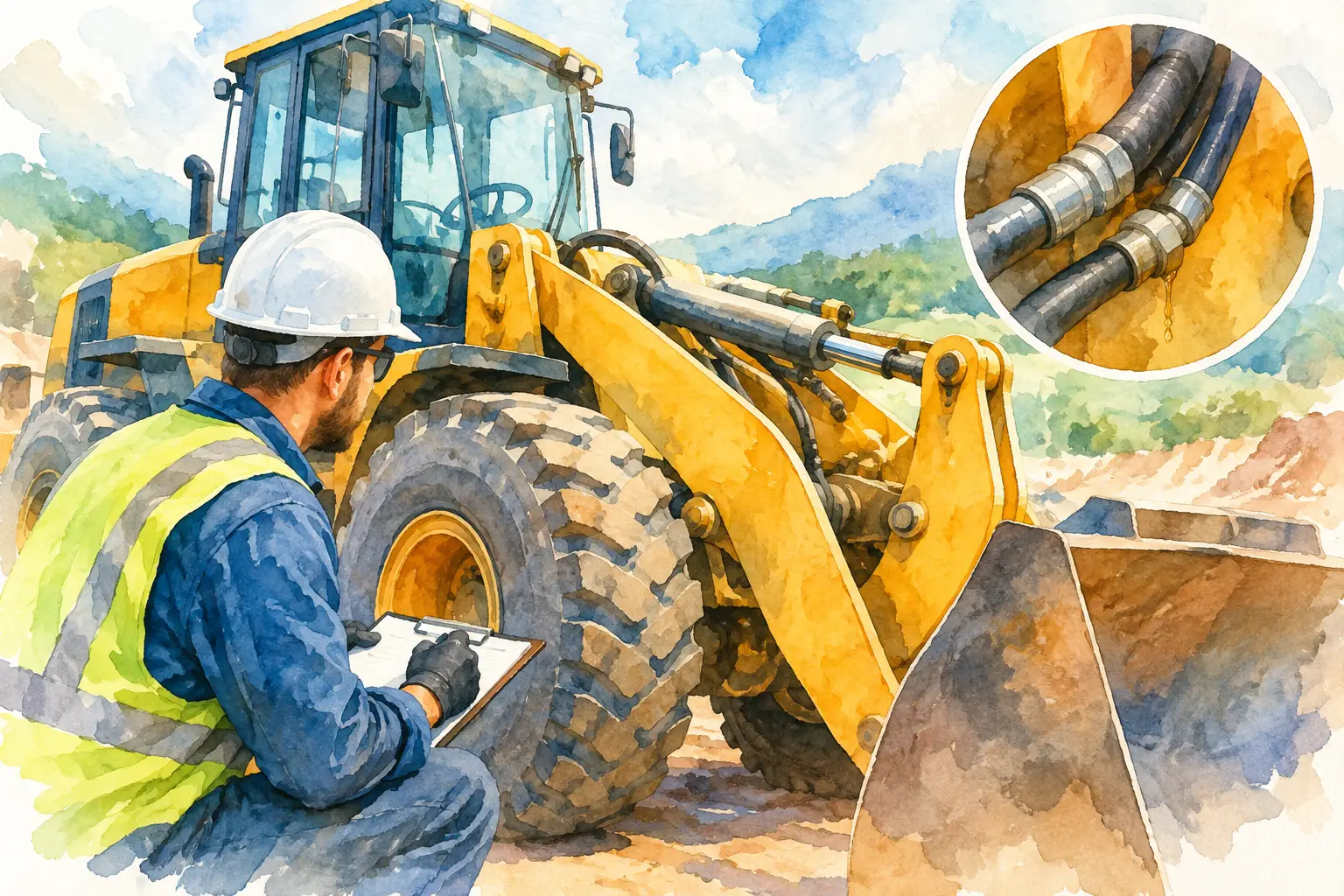
External oil leakage is the fault most operators notice first. Oil around the rod gland, a wet cylinder barrel or drips collecting under the machine usually point to a seal issue, rod damage or excessive internal pressure. Left alone, a small leak can turn into rapid oil loss, contamination and damage to other hydraulic components.
Cylinder drift is another warning sign. If an excavator attachment creeps down, a forklift mast will not hold position or a trailer ram slowly retracts under load, oil may be bypassing internally across the piston seals. The cylinder may look dry from the outside, yet it is no longer doing its job safely or efficiently.
Other signs include jerky movement, reduced stroke speed, visible scoring on the rod, bent rods, damaged mounting eyes and unusual knocking at the end of travel. These symptoms do not always mean the cylinder alone is at fault. A blocked filter, contaminated oil, relief-valve issue, damaged hose or weak hydraulic pump can produce similar behaviour. That is why diagnosis comes before parts.
Diagnose the Whole Hydraulic Fault
A cylinder is part of a working system, not an isolated component. Before stripping it down, a capable technician checks the machine’s operating symptoms, hydraulic oil condition, hose routing, fittings, mounting points and available pressure. This helps separate a failed cylinder from a problem elsewhere in the circuit.
For example, a recurring gland seal failure may be caused by a scored rod. Replacing the seal without addressing the rod surface can lead to another leak almost immediately. A bent rod can overload the gland and barrel, while loose pins or worn bushes can place the cylinder under side load it was not designed to carry.
Contamination also matters. Fine debris in the oil can damage seals and score precision surfaces. Water contamination can cause corrosion inside a barrel, particularly on machinery that works outdoors, sits idle for long periods or operates around wash-down areas. If contamination is suspected, the repair should include attention to the hydraulic oil, filters and source of entry. Repairing one ram while leaving contaminated oil in the system is a poor trade-off.
What Quality Hydraulic Cylinder Repairs Involve
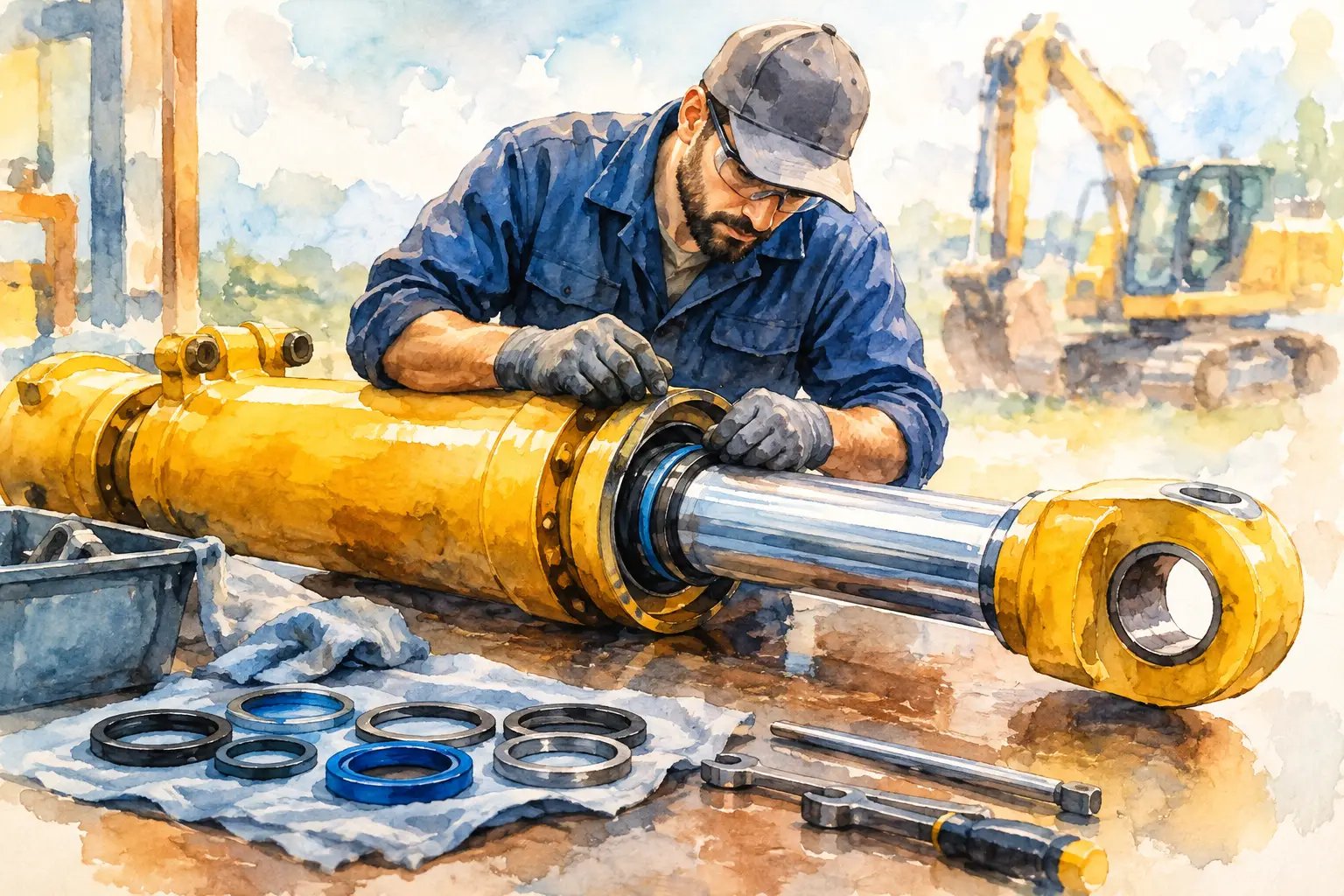
Workshop-quality hydraulic cylinder repairs start with safe removal and controlled disassembly. Cylinders can retain pressure, carry substantial weight and be fitted to raised implements or attachments. The machine must be isolated, supported correctly and made safe before hydraulic lines or pins are removed.
Inspecting the Rod, Barrel and Gland
Once dismantled, each major component needs inspection rather than assumption. The rod is checked for scoring, corrosion, pitting, bends and damaged chrome. Minor surface defects may be repairable depending on their depth and location. Deep scoring, peeling chrome or a bent rod generally requires more substantial work or replacement.
The barrel is inspected for internal scoring, corrosion and wear. Damage inside the barrel can quickly destroy new seals and reduce cylinder performance. The gland, wear rings, piston, threads and retaining components also need assessment. A seal kit is only one part of the repair. The surrounding hard parts determine whether that seal kit will last.
Replacing Seals and Reassembling Correctly
Seal selection must suit the cylinder design, operating pressure, oil type and working environment. Heavy equipment cylinders may face heat, dust, mud, vibration and long duty cycles, so the wrong seal material or incorrect fitment can shorten service life.
During reassembly, clean working practices are essential. Dirt introduced during a repair can circulate through the hydraulic system and create further failures. Components must be assembled to the required specification, with threads, locking arrangements and clearances checked before the cylinder returns to service.
Testing is the final safeguard. A repaired cylinder should be checked for external leaks, smooth operation and correct holding ability. Once fitted back to the machine, the technician should confirm that the cylinder operates through its full range without binding, abnormal movement or interference from worn pins and bushes.
Field Repair or Workshop Repair?
The right repair location depends on the failure and the equipment. Some hydraulic faults can be diagnosed and resolved on site, particularly where the issue is accessible and the cylinder can be safely removed. Mobile support saves the time and transport cost involved in moving a disabled machine, which can be significant for excavators, agricultural equipment and heavy trucks.
However, a cylinder requiring machining, rod straightening, barrel work or extensive testing may need workshop facilities. Trying to complete a complex repair in unsuitable conditions can compromise cleanliness, safety and accuracy. The practical approach is to assess what can be completed reliably in the field and what should be removed for controlled workshop repair.
For operators across Sydney, Western Sydney and the Hunter Valley, a mobile mechanical provider can also inspect the wider equipment fault on site. That is valuable when a cylinder failure is linked to hoses, fittings, electrical controls, pumps or mechanical damage around the attachment.
Preventing Repeat Cylinder Failures
Hydraulic cylinders work hard, but many failures give warning before they become a breakdown. Regular inspections during scheduled servicing help identify oil seepage, damaged rods, worn pins and loose mounting hardware while repairs are still manageable.
Keep exposed rods clean where practical, particularly after working in abrasive dust, slurry or mud. Avoid operating equipment with damaged rod chrome, because each stroke can cut or tear the gland seal. Check that hoses are supported correctly and are not pulling on ports or rubbing against moving components.
Operators should also report changes in machine behaviour early. A boom that drifts only when warm, a forklift that slows under load or a ram that starts to move unevenly can provide useful diagnostic information. Waiting until the cylinder fails completely usually turns a planned repair into an urgent recovery job.
Oil and filtration maintenance remain equally important. Use the specified hydraulic oil, maintain correct levels and replace filters to the equipment schedule or sooner where operating conditions demand it. If a cylinder has failed due to internal damage, inspect the system for contamination before putting the machine straight back into full service.
Repair or Replace the Hydraulic Cylinder?
Replacement can be the best decision when a barrel is severely damaged, a rod is beyond economic repair, parts are unavailable or the cylinder has suffered structural damage. It may also make sense where a standard replacement unit is immediately available and the cost of extended downtime is higher than the repair cost.
But replacement is not automatically the cheaper option. Many cylinders are repairable, and a correct repair can restore reliable service at a sensible cost. Custom cylinders, older agricultural equipment and specialised attachments may be difficult to replace quickly. The decision should consider the condition of the components, lead time, machine criticality and whether the underlying cause has been fixed.
A trusted repairer will explain the options clearly. The goal is not to sell the largest job. It is to return the equipment to safe, dependable operation with the least disruption to your work.
Agri Repairs provides practical mobile support for heavy equipment where hydraulic faults, mechanical issues and downtime need a coordinated response. When a cylinder starts leaking, drifting or binding, arranging an inspection early gives you more repair options and a better chance of keeping the machine on the job.

 Location: Western Sydney and Hunter Valley, NSW
1 Comment
[…] lift cylinder can look dry externally and still fail internally. Worn piston seals allow oil to pass from the […]