

A driveline fault rarely stays small for long. A new vibration under load, a sharp clunk during a gear change or grease thrown around the underside of the truck can quickly turn into a roadside stoppage, damaged transmission components and missed deliveries. This truck driveline repair guide explains what fleet operators and owner-drivers need to watch for, how faults are diagnosed and when the vehicle needs to come out of service.
What the truck driveline does
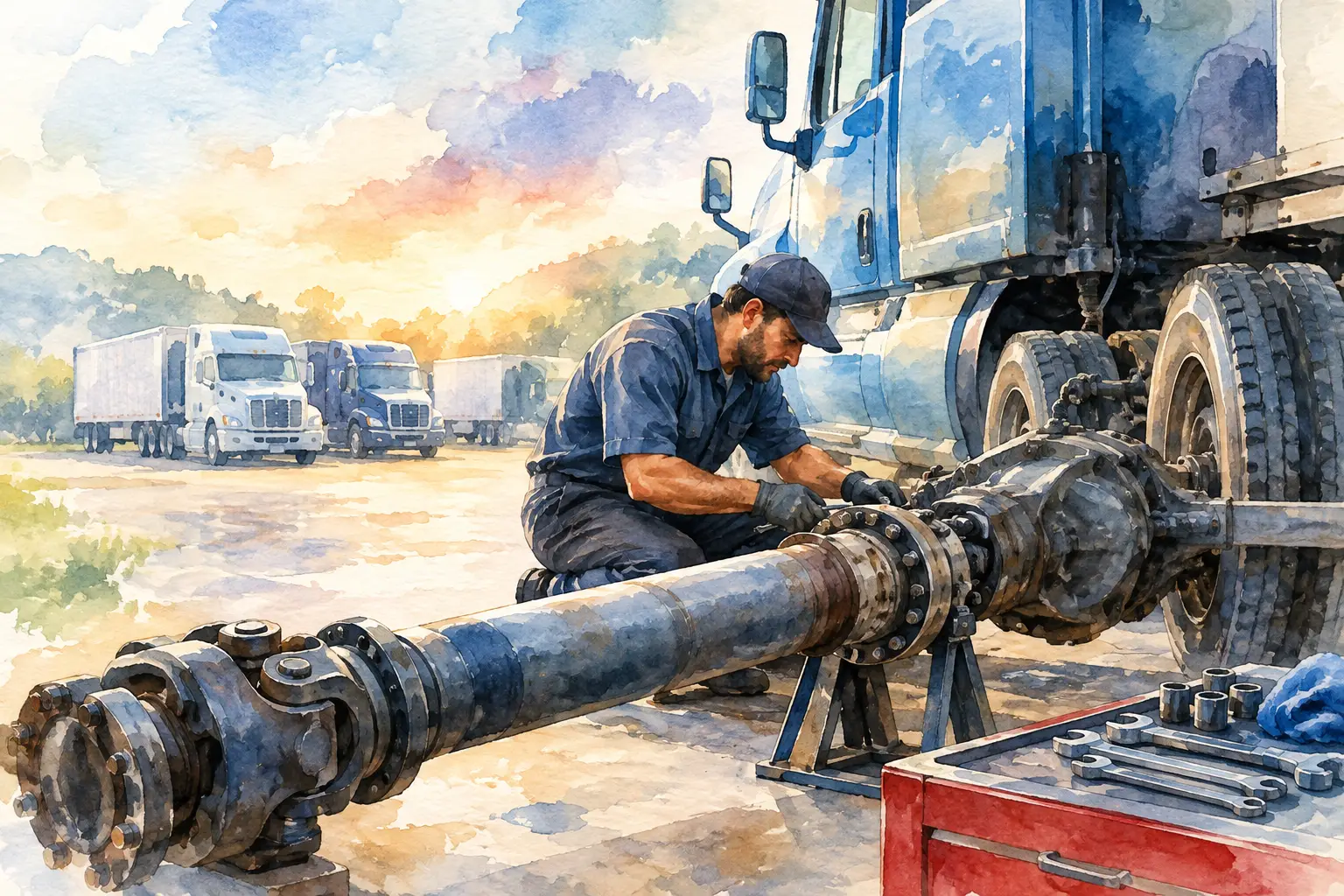
The driveline transfers engine torque from the gearbox or transfer case to the differential and drive wheels. On a heavy vehicle, it commonly includes the tailshaft, universal joints, slip joint or spline, centre bearing, flanges, yokes and differential input connection. In multi-piece tailshaft systems, correct alignment and phasing are critical.
These parts work hard. They operate through changing suspension travel, high torque loads, rough access roads, trailer movement and constant vibration. A truck hauling through a quarry, working around a farm or running stop-start metropolitan freight will place different stresses on the same components.
Because the driveline sits beneath the vehicle, problems can be missed during routine walk-arounds. That does not make them low risk. A failed universal joint or damaged tailshaft can cause major underbody damage, loss of drive and a serious safety incident.
Signs your driveline needs attention
The first symptom often tells a technician where to start, but it is not enough to diagnose the fault on its own. A vibration may come from the tailshaft, but it can also be related to wheels, tyres, suspension, engine mounts or a transmission issue. Proper inspection matters.
A vibration that rises with road speed, particularly through a narrow speed range, can point to tailshaft imbalance, incorrect operating angles, a worn centre bearing or a bent shaft. If it worsens when the truck is loaded or climbing, universal joints, splines and differential connections deserve close attention.
A clunk when selecting drive, taking off, changing gears or coming on and off the throttle can indicate excessive free play. Worn universal joints, loose flange bolts, damaged splines and differential backlash can all create this feeling. A single clunk is not always an emergency, but it should not be ignored on a working vehicle.
Look for grease around the tailshaft tunnel, crossmember or chassis rails. It may be a sign that a universal joint seal has failed and lubricant has escaped. Rust-coloured dust around a bearing cap is another warning sign. It often means the bearing has been running dry and is wearing internally.
Other signs include a rumbling or droning noise under power, a squeak at low speed, harsh shuddering on take-off, visible movement at the centre bearing, or a tailshaft that appears dented, scraped or out of line. If the truck has struck an object underneath or has been recovered after becoming bogged, inspect the driveline before returning it to normal work.
Safety comes before a quick repair
A driveline rotates at high speed and stores considerable energy. Never inspect, grease or attempt to tighten driveline components while the engine is running. Do not work under a truck supported only by a jack, and do not assume the park brake alone will prevent movement.
Park on stable, level ground where possible, isolate the vehicle, chock the wheels and use suitable rated stands or lifting equipment. Follow site isolation procedures, particularly on mine, civil and industrial sites. If there is heavy vibration, a suspected loose tailshaft, broken universal joint or contact marks on the shaft, keep the vehicle out of service until it has been assessed.
A temporary repair made in a hurry can create a larger failure later. Reusing stretched bolts, fitting incorrect fasteners or assembling a shaft out of phase can cause vibration and damage parts that were not originally at fault.
How driveline faults are properly diagnosed
A reliable driveline repair begins with the operator’s report. When did the noise start? Is it present only under load? Did the truck hit a rut, tow beyond its normal load or recently have gearbox, clutch, suspension or differential work completed? These details narrow the inspection quickly.
The technician then checks the complete driveline rather than replacing the most obvious worn part. This includes checking universal-joint movement, bearing cap condition, grease points, slip-joint wear, centre-bearing rubber, shaft straightness, flange faces, mounting bolts and signs of contact with chassis components.
Driveline angles need to be considered where suspension height has changed, airbags have faults, lift blocks have been fitted or repairs have altered the transmission or differential position. Even new universal joints will not last if the operating angles are wrong.
Tailshaft phasing is equally important on a multi-piece assembly. The yokes must be positioned correctly to cancel speed fluctuations through the joint. If a shaft has been removed and reassembled incorrectly, the result may be a vibration that feels like an imbalance fault.
Where a shaft is bent, damaged or suspected of being out of balance, it may need specialist measurement, straightening or balancing. Replacing a universal joint alone will not correct a shaft that has lost balance or has excessive runout.
Common repairs in a truck driveline repair guide
Universal-joint replacement is one of the most common driveline jobs. The correct repair involves removing the shaft safely, inspecting yokes for wear or distortion, fitting quality components and checking that the joint moves freely without binding. Greaseable joints must be lubricated correctly, without forcing damaged seals out of position.
Centre-bearing replacement requires more than changing the bearing assembly. The support bracket, rubber mount, shaft alignment and preload all need inspection. A failed centre bearing can be a result of age and kilometres, but it may also be caused by incorrect driveline angles or a damaged shaft.
Slip-joint and spline wear can create clunks and vibration. Depending on the design and damage, the repair may involve rebuilding or replacing the affected section. Loose flange bolts or worn flange faces need immediate attention because movement at this connection can damage the transfer case, gearbox or differential input flange.
A complete tailshaft replacement is sometimes the most economical and reliable option, particularly after a joint failure has damaged the tube or yokes. The trade-off is cost and lead time, but refitting compromised parts can put a truck back off the road soon after it returns to work.
Preventing avoidable driveline downtime
Preventative maintenance is where fleet operators protect availability. Driveline checks should be included in scheduled servicing, especially on trucks working in dusty, wet, high-load or rough-ground conditions. Manufacturer intervals are a starting point, but severe-duty work may justify more frequent inspection and lubrication.
Greasing is not simply a matter of adding lubricant. Use the correct grease, clean fittings before connecting the grease gun and confirm lubricant is reaching the joint. A blocked grease path can leave bearings dry even when the service sheet says the joint was lubricated.
Drivers and operators should report changes early rather than waiting for the next service. A short note about where a vibration occurs – such as 70 to 80 km/h, only when loaded, or when decelerating – gives the repair team useful diagnostic direction. It also helps distinguish a driveline issue from tyre, brake or suspension faults.
After major drivetrain, suspension or accident repairs, include a driveline inspection before the truck resumes full-duty work. Changes to ride height and mounting position can alter angles enough to shorten component life.
When mobile repair support makes sense
Some driveline issues can be assessed and repaired on site, saving the time and cost of transporting an immobile truck to a workshop. Mobile support is particularly useful for fleet yards, farms, construction sites and roadside breakdowns where a technician can inspect the fault, isolate risks and carry out suitable repairs.
However, some jobs need workshop equipment or specialist tailshaft balancing. The right decision depends on the damage, parts availability, site safety and whether the repair can be completed to a workshop-quality standard. Returning a truck to service quickly matters, but returning it safely matters more.
For operators across Western Sydney and demanding field locations, Agri Repairs can assess truck driveline faults as part of a broader mechanical inspection, helping identify whether the issue is isolated to the shaft or connected to the gearbox, suspension, differential or mounting system.
A driveline warning is the truck giving you time to act. Pull the vehicle from heavy work when symptoms are serious, record what the operator has felt and arrange a proper inspection before a manageable repair becomes an expensive recovery.
 Location: Western Sydney and Hunter Valley, NSW