

A machine can have a sound engine, fresh oil and a capable operator, then still stop the job because contaminated fuel has reached the injectors. Diesel fuel system maintenance is one of the most direct ways to prevent that kind of avoidable downtime across utes, tractors, loaders, excavators, forklifts and fixed plant.
Fuel systems on modern diesel equipment work at extremely high pressure and to fine tolerances. Water, dirt, microbial growth or a restricted filter can quickly turn a minor fuel-quality issue into hard starting, poor performance, injector damage or a machine that will not run. On a farm, mine site, road job or transport run, the cost is rarely limited to the repair. It includes lost production, delayed loads, idle operators and recovery logistics.
Why fuel system faults become expensive
Diesel is both fuel and, in many systems, a lubricant for precision components. Clean fuel supports the injection pump and injectors. Contaminated fuel can score internal components, interfere with spray patterns and reduce combustion quality.
Water is a common problem. It can enter through poor storage practices, damaged caps, tank breathers, condensation or contaminated deliveries. Once inside the system, water can cause corrosion and reduce lubrication. In common-rail systems, where injector and pump components are manufactured to very fine clearances, that damage can escalate quickly.
Dirt and sediment are just as damaging. Dust from site work, deteriorating tank coatings, rust and debris in storage tanks can block filters or pass through when filters are overdue, incorrectly fitted or bypassed. A restriction may first show up as a lack of power under load, uneven running or repeated filter warnings. Leaving it until the machine stops can turn a scheduled service item into a roadside or field breakdown.
Diesel fuel system maintenance starts before the machine
The condition of the fuel in bulk storage has a major effect on fleet reliability. It makes little sense to fit a new fuel filter if the machine is then filled from a tank containing water, sediment or diesel that has been sitting too long.
Inspect site tanks, bowsers and transfer equipment as part of the maintenance plan. Tank caps and seals should be intact, breathers should be clean, and dispensing hoses should be protected from dust and water. Keep fill points clean before opening them, particularly on agricultural and civil equipment working in dry, dirty conditions.
Bulk tanks need periodic checks for water and sediment at the bottom of the tank. Water is heavier than diesel and will settle, creating an environment where microbial contamination can develop at the fuel-water interface. This growth can form sludge that blocks filters and contaminates entire tanks. Where it is suspected, the tank needs proper treatment and cleaning rather than repeated filter replacements on affected equipment.
Fuel age also matters. Standby plant, seasonal machinery and low-use equipment are more exposed to degradation because fuel can remain in tanks for extended periods. The right approach depends on how long the equipment sits, storage conditions and the fuel supplier’s recommendations. A tractor used heavily through harvest has different requirements to a generator or forklift that may sit between jobs.
What to inspect during routine servicing
A practical fuel-system inspection should be built into scheduled servicing rather than treated as a breakdown-only task. Operators are often first to notice a change in starting, power or engine sound, but a technician can identify the causes before a failure develops.
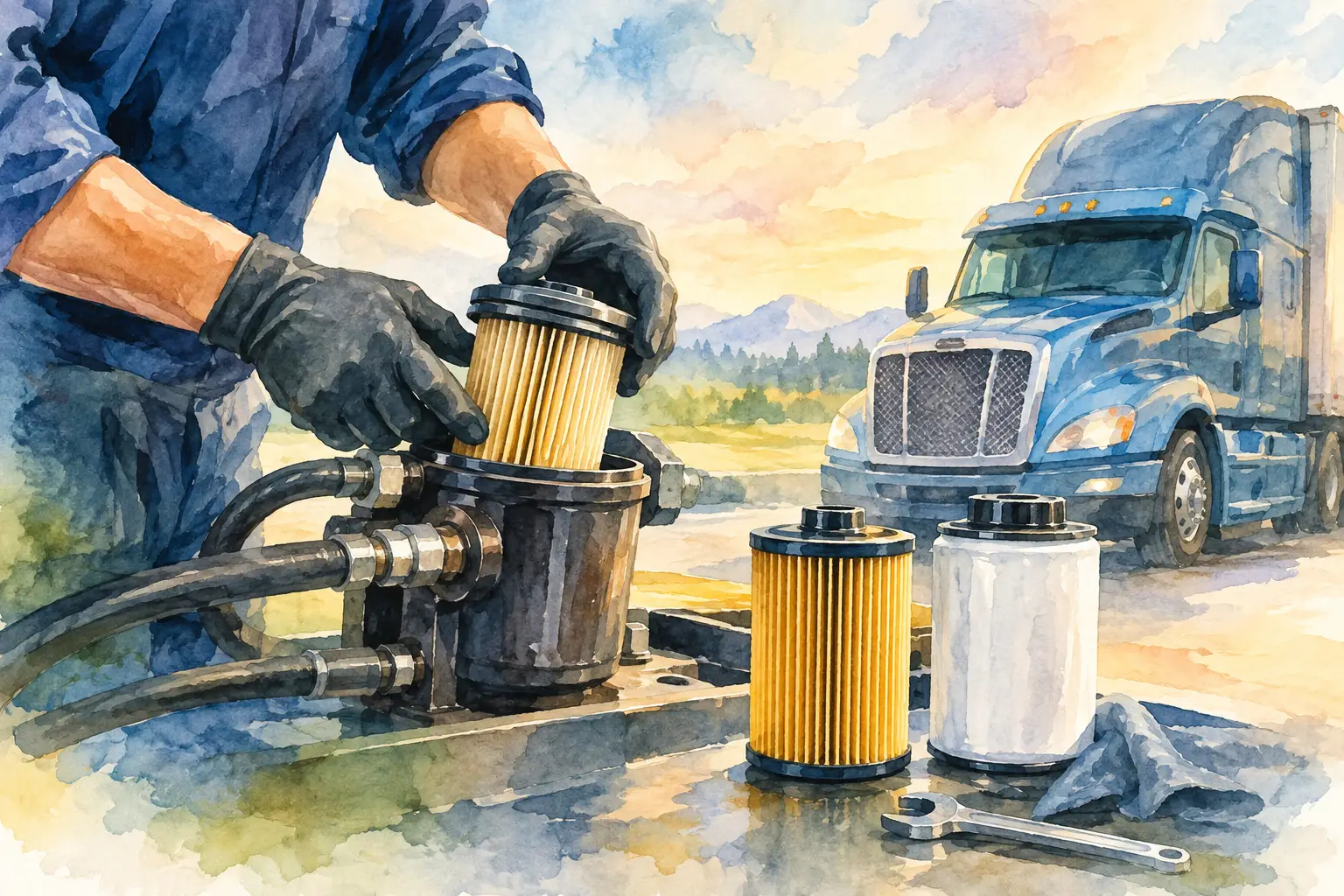
During service, attention should be given to the fuel filter condition and replacement interval, water separator operation, fuel lines, clamps, primer pumps, tank vents and electrical connections to fuel-related sensors. Filters should be replaced with the correct specification for the machine. A cheaper or incorrect filter may not provide the required water separation or filtration rating, which is a poor trade-off on high-pressure injection systems.
Where a water separator is fitted, drain it at the manufacturer’s recommended interval or sooner when operating in wet, humid or high-risk conditions. Do not wait for a warning light if regular checks are practical. The drained fuel should be checked for obvious water, sediment or dark contamination, as it can provide an early warning of a broader storage issue.
Also inspect fuel lines for rubbing, cracking, leaks and loose connections. A small air leak on the suction side may not leave a visible diesel leak, but it can allow air into the system. This can cause difficult starting, rough idle or stalling, particularly after the machine has been parked.
Signs the system needs attention now
Fuel problems do not always begin with a complete no-start. Acting on the early signs can protect expensive components and reduce time off the job.
Watch for hard starting, extended cranking, unstable idle, surging, loss of power under load, excessive smoke, poor fuel economy, fuel leaks or a recurring fuel-filter restriction warning. On electronically controlled engines, fault codes relating to rail pressure, fuel metering or water in fuel need professional diagnosis. The code points to a system condition, not always the failed part.
For example, low rail pressure may be caused by a blocked filter, air entering the suction line, a failing lift pump, contaminated fuel, an injector issue or high-pressure pump wear. Replacing parts without confirming the cause can waste time and money while the fault remains.
Do not treat injector work as a quick repair
Modern diesel injection systems are not forgiving of poor cleanliness or improvised repairs. Opening high-pressure lines unnecessarily, reusing damaged sealing components or allowing dirt into an exposed fuel connection can create a bigger problem than the original fault.
Any work involving high-pressure pumps, injectors or common-rail components should be carried out with the correct diagnostic equipment, procedures and cleanliness controls. Injector coding, rail-pressure testing and fuel-system priming requirements vary between manufacturers. The correct repair is based on measured results, not assumptions.
This is particularly relevant when a machine has suffered a major contamination event. If water or metal debris has travelled through the system, replacing one injector or one filter may not be enough. The tank, lines, low-pressure circuit and high-pressure components may all need assessment. It can be a larger repair upfront, but incomplete cleaning risks repeated failures and further damage.
Match service intervals to the work, not just the calendar
Manufacturer service intervals are the starting point, but operating conditions should determine whether they are adequate. Equipment working in dusty quarry conditions, remote agricultural areas, wet sites or stop-start material-handling work may require more frequent filter inspections and water checks than machinery operating in controlled conditions.
The same applies to fleet age and fuel-handling practices. A newer ute with reliable fuel supply and long highway runs may have a predictable service pattern. An older loader filled from multiple site tanks, or a seasonal harvester that sits for months, needs closer fuel management.
Keep service records that include filter changes, drained-water findings, fuel-source concerns and recurring fault codes. This creates a useful history for identifying patterns. If several machines from the same site develop blocked filters, the issue is unlikely to be individual equipment failure. It points back to storage, delivery or handling practices.
A practical response when contamination is suspected
If contaminated fuel is suspected, stop adding fuel from the source until it has been checked. Continuing to top up affected machines spreads the problem across the fleet. Record the affected equipment, symptoms and recent fuel deliveries so the source can be traced quickly.
Avoid repeatedly cranking a machine that will not start after a suspected contamination event. Cranking can circulate contaminated fuel further through the system. A qualified technician can take fuel samples, inspect filters, check pressure data and determine whether the fault is confined to the low-pressure side or has reached high-pressure components.
For operations across Western Sydney, the Hunter Valley and surrounding regional NSW, mobile diagnostics can be especially valuable when equipment cannot be easily moved. Agri Repairs can assess fuel-related faults on site, carry out scheduled servicing and coordinate the mechanical work needed to return equipment to service with workshop-quality care.
A clean fuel supply, correct filters and timely inspections do more than protect engine parts. They give operators confidence that the ute will make the run, the tractor will finish the paddock and the loader will stay productive through the shift. When the first warning sign appears, deal with it before it becomes the reason the job stops.


 Location: Western Sydney and Hunter Valley, NSW
1 Comment
Your comment is awaiting moderation.
все casino бездепозитный бонус 1111 фриспины без депозита с выводом без отыгрыша
Your comment is awaiting moderation.
бесплатные фри спины казики с бесплатным бонусом без депозита
Your comment is awaiting moderation.
бездепозитные деньги бездепозитный бонус 2026
Your comment is awaiting moderation.
фри спины без депозита и отыгрыша фриспины без вейджера за регистрацию
Your comment is awaiting moderation.
https://t.me/AA_WomanSPB
Your comment is awaiting moderation.
1000 рублей за регистрацию с выводом где за регистрацию дают деньги на карту
Your comment is awaiting moderation.
бездепозитные казино бездепозитные казино
Your comment is awaiting moderation.
casino бездепозитный бонус бездепозитные деньги
Your comment is awaiting moderation.
приветственный бонус без депозита риобет зеркало сайта
Your comment is awaiting moderation.
https://t.me/s/rabkor?before=5
Your comment is awaiting moderation.
Уршельский коростель Мещерские зори
Your comment is awaiting moderation.
бесплатные фриспины фриспины без депозита
Your comment is awaiting moderation.
бонус за регистрацию без депозита с выводом фриспины без депозита за регистрацию с выводом
Your comment is awaiting moderation.
The way this post is written makes the whole discussion feel very easygoing and clear, while also keeping enough depth in the topic to make readers interested in sharing their own opinions and continuing the conversation further.
XANAX FOR SALE HERE PORNHUB 裸照影片販售
Your comment is awaiting moderation.
Флешку объёмом 2 ГБ и стильные флешки в подарок мужчине в Екатеринбурге. Сладкий сувенир с нанесением логотипа цены и шопперы опт в Челябинске. Флеш-накопитель на 128 гигов и гравировка по флешке рядом со мной в Твери.
https://usb-flashki-optom-24.ru/
Your comment is awaiting moderation.
Ресурсы для взрослых могут служить средством сексуального образования, а также поддержкой в понимании личных предпочтений.
Такие площадки дают возможность людям исследовать свои фантазии в контролируемой обстановке, уменьшая риски фактических последствий.
генератор порно рассказов
Для пар общее ознакомление подобных материалов может укреплять взаимопонимание и служить причиной для честного разговора о предпочтениях и рамках.
Кроме того такие ресурсы обеспечивают возможность для безрисковой реализации напряжения и уменьшения психологического напряжения, не причиняя вреда окружающим.
[…] diesel engine needs clean fuel delivered at the correct pressure and volume. Restricted filters, water contamination, blocked tank breathers, air leaks on the suction side, failing lift pumps and high-pressure […]
Your comment is awaiting moderation.
Тут сайте есть шанс обнаружить важную информацию.
https://nashipesni.ru/pub/2026-06-02-pochemu-peregovory-rossii-i-ssha-zashli-v-stazis-ne-tolko-iranskiy-konflikt-no-i-kharakter-trampa/