

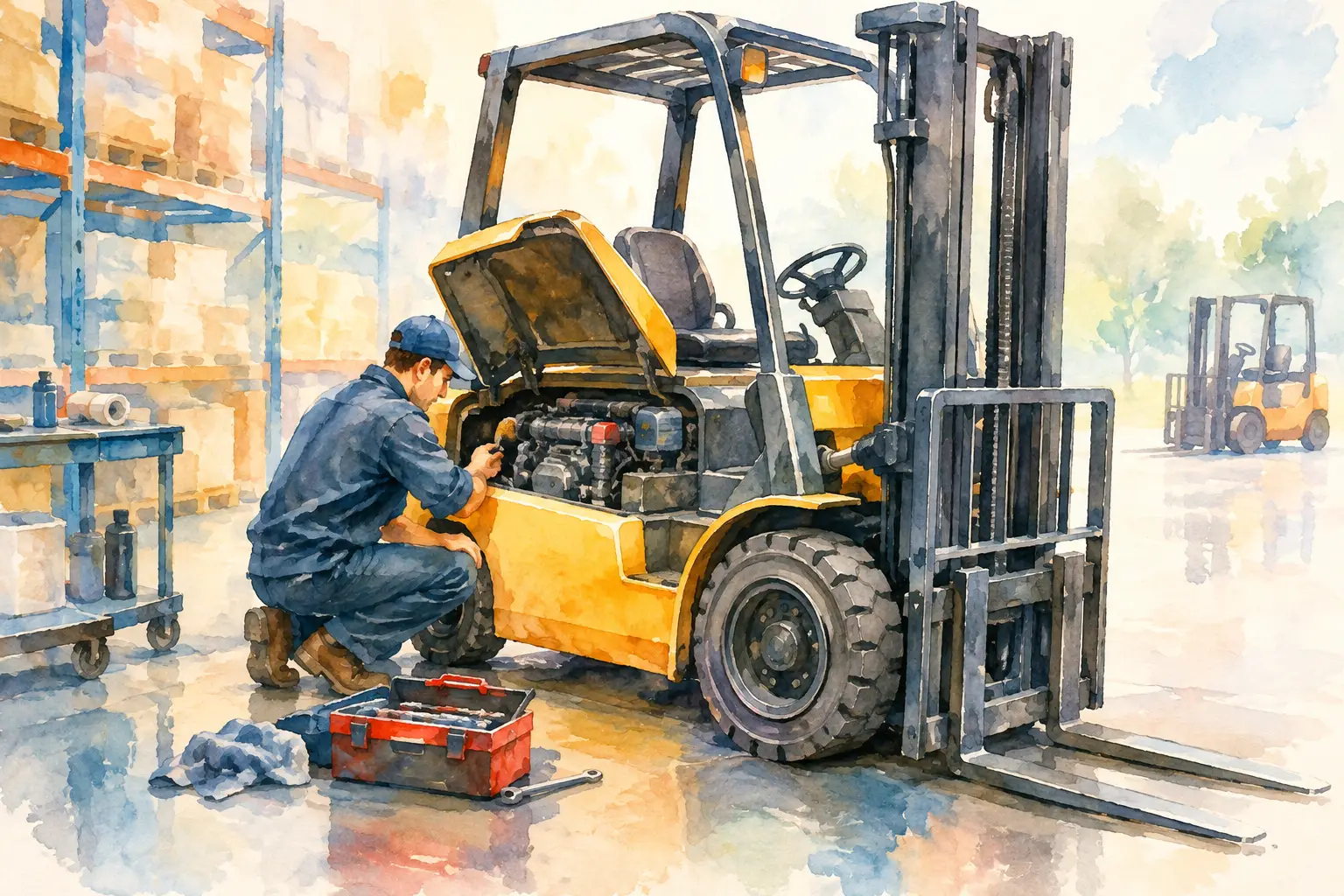
A forklift can look perfectly serviceable right up to the moment it stops lifting, loses steering response or fails a pre-start check. Sensible forklift service intervals are not about servicing machinery for the sake of it. They are about finding wear before it becomes a breakdown, a damaged load, or an unsafe machine on a busy site.
For warehouses, farms, yards, civil sites and industrial operations, the right schedule depends on operating hours, load demand, site conditions and forklift type. A machine moving light palletised stock on a clean concrete floor does not wear at the same rate as a forklift handling heavy loads in dust, mud, rain or uneven yards. The service plan needs to reflect the work, not just a date circled on a calendar.
Start with daily checks, not the scheduled service
A scheduled service cannot replace a proper pre-start inspection. Operators are closest to the machine and are usually the first to notice a new noise, a hydraulic leak, a slow lift function or a steering issue. Checking these items before a shift gives the business a chance to take action before a minor fault turns into downtime.
A practical pre-start should cover the tyres and wheels, forks and carriage, mast chains, hydraulic hoses, lights, horn, brakes, steering, seat belt and warning devices. For internal-combustion machines, check engine oil, coolant, fuel connections and exhaust condition. On electric forklifts, inspect the battery, leads, connectors and charging equipment for damage, corrosion or overheating.
Operators should also test lift, tilt and side-shift functions without a load where safe to do so. Any change in response matters. A forklift that drifts, shudders, struggles to lift or leaves fluid on the ground should be reported and assessed before it is worked harder.
Recommended forklift service intervals by use
Manufacturer instructions should always set the baseline for a specific make and model. As a working rule, many forklifts benefit from a professional service at set operating-hour intervals, with a more detailed inspection at longer intervals. The exact interval varies, but the following structure gives fleet managers a useful starting point.
Every shift or daily
Complete the operator pre-start and record defects. This is the most frequent inspection because it identifies obvious safety concerns and changes that have occurred since the previous shift. It also creates a clear handover between operators.
Around every 250 hours
A minor service interval is often appropriate at roughly 250 operating hours, particularly for hard-working diesel, petrol or LPG forklifts. This commonly includes fluid and filter checks, lubrication, inspection of hoses and belts, brake and steering checks, tyre condition, mast and chain assessment, and a look over the electrical system.
For electric forklifts, the focus is different but no less important. Battery condition, water levels where applicable, terminals, connectors, charging performance, cables and drive components need close attention. Battery issues can cause slow operation and lost shifts well before the forklift completely fails.
Around every 500 hours
At approximately 500 hours, the inspection should go further. This is a sensible point to review brake wear, steering linkages, wheel bearings, mast rollers, chain condition and adjustment, hydraulic operation, drive-line components and safety controls. Filters, oils and lubricants should be changed in line with the manufacturer schedule rather than assumed to be the same across every machine.
A forklift used in a multi-shift operation may reach 500 hours quickly. If it runs eight to sixteen hours a day, a calendar-based annual service alone is not enough. Hours are usually the better trigger for planned maintenance on high-use equipment.
Around every 1,000 hours and annual inspections
A major service at about 1,000 hours is a good opportunity for a more comprehensive assessment of the machine. Depending on the forklift, this may include changing specified oils and filters, checking engine tune and emissions components, testing hydraulic performance, inspecting the mast structure, examining pins and bushes, and assessing the condition of the transmission or electric drive system.
Annual inspections may also be required under site procedures, hire agreements, insurance conditions or applicable safety obligations. These requirements are separate from routine maintenance. A machine can have a current service history and still need a formal inspection or certification process to meet the rules that apply to its workplace.
Hours matter, but site conditions matter more
Service intervals need shortening when the environment is hard on the machine. Dusty agricultural sheds, timber yards, recycling facilities, food-processing areas, wet wash-down zones and outdoor construction sites all create different maintenance risks.
Dust can clog radiator cores, air filters and electrical connections. Mud and moisture can accelerate corrosion and contaminate lubricants. Uneven ground puts more stress on tyres, steering, mast rollers and chassis components. Frequent operation on ramps or with heavy loads increases brake and transmission demand. In these conditions, waiting for the standard interval can be false economy.
A forklift that only operates occasionally has the opposite problem. Low-hour machines still need planned attention because seals can dry out, batteries can deteriorate, fuel can become contaminated and safety faults can go unnoticed. Calendar-based servicing is particularly useful for standby forklifts and seasonal farm equipment.
Match the service plan to the forklift type
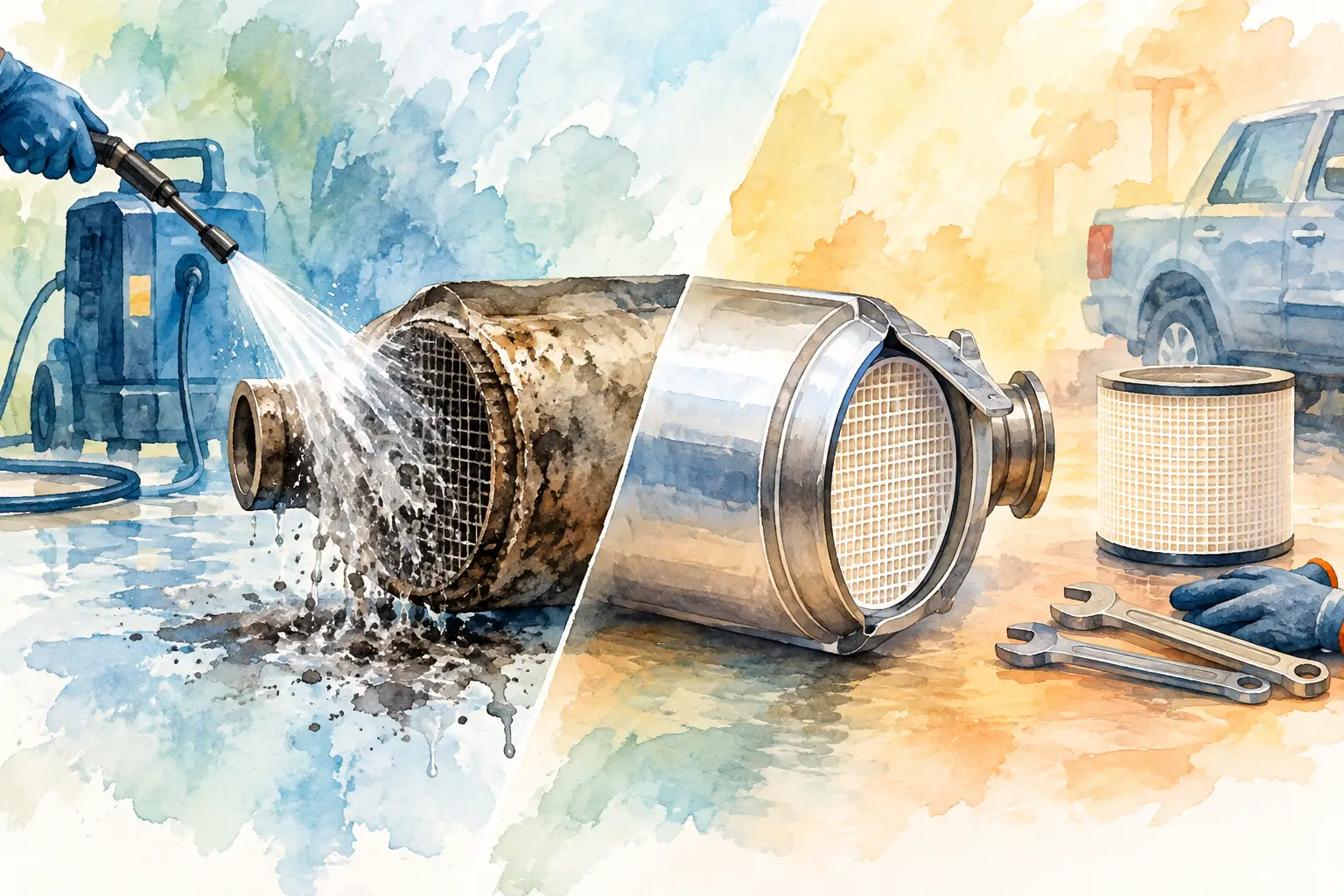
Diesel and LPG forklifts need regular attention to engines, cooling systems, fuel systems and exhaust components. In dusty or hot conditions, air filtration and cooling performance deserve closer monitoring. A blocked radiator or restricted air filter can quickly lead to power loss, overheating and avoidable engine damage.
Electric forklifts remove engine servicing but they do not remove maintenance. Battery care is central to uptime. Poor charging practices, damaged leads, low electrolyte levels on suitable battery types, loose terminals and ignored fault codes can shorten battery life and interrupt operations. Drive motors, controllers, brakes, steering and hydraulic systems still require professional inspection.
The attachment also changes the maintenance picture. Forklifts fitted with clamps, rotators, extensions or specialised lifting equipment may place additional demand on hydraulics and load-handling components. Make sure the service provider knows how the machine is configured and what it lifts in normal operation.
Do not service only when something breaks
Breakdown repairs are sometimes unavoidable, but a reactive approach creates expensive choices. A forklift that stops in a loading lane can delay trucks, staff, production and dispatch. If the machine damages stock or becomes unsafe, the cost extends well beyond the repair invoice.
Planned servicing gives a technician time to identify wear and organise parts before failure. It also helps managers budget maintenance, schedule machinery out of service during quieter periods and make informed decisions about repairs versus replacement. Service records show recurring faults, high-cost components and whether one unit is consuming more maintenance than the rest of the fleet.
The best plan is practical. It should identify each forklift, its operating hours, its normal work environment, the manufacturer requirements, daily check responsibility and the next scheduled service point. Keep the record accessible to operators and supervisors, not buried in a filing cabinet or an old email chain.
Signs your forklift needs attention now
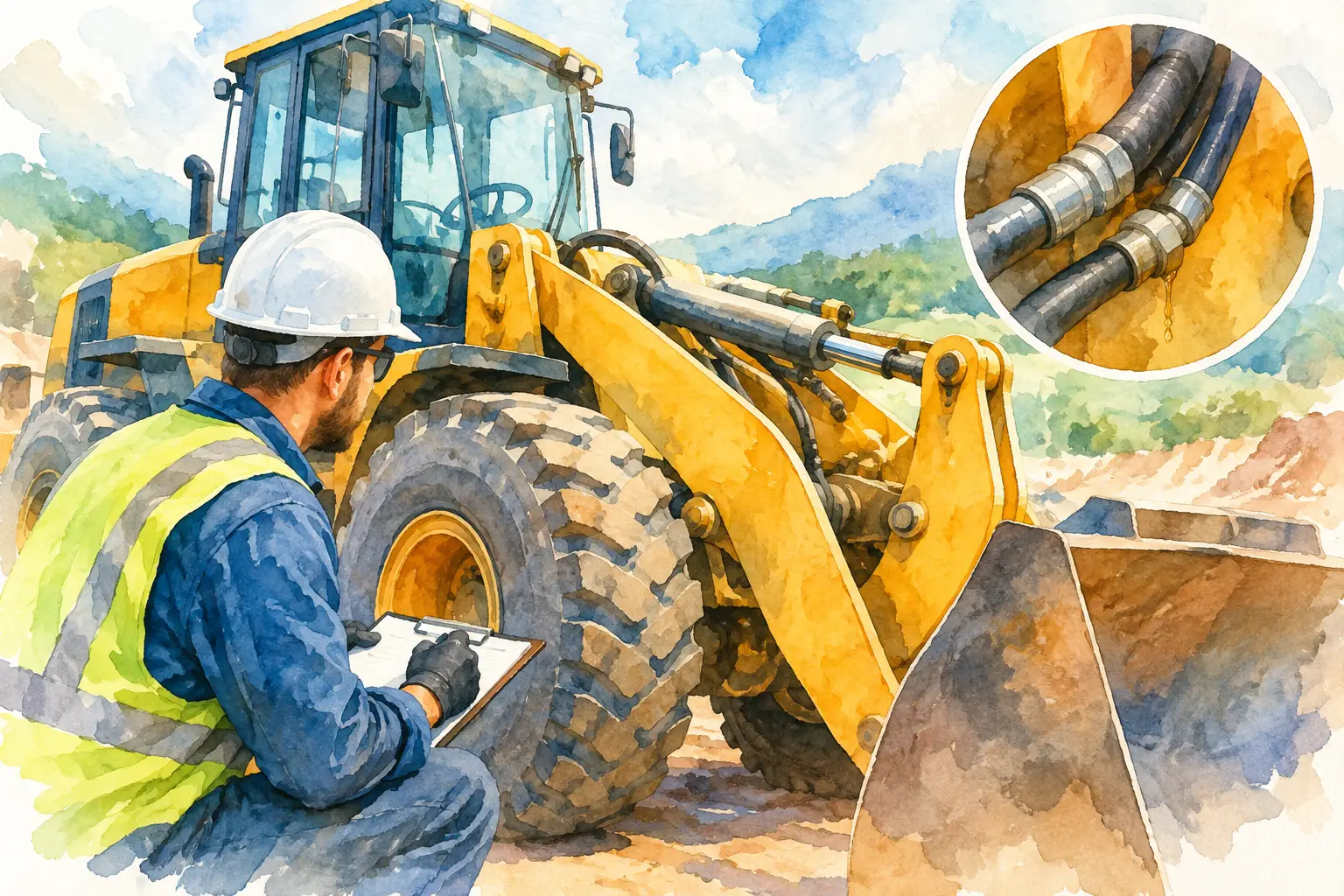
Do not wait for the next planned interval if the forklift shows warning signs. New hydraulic leaks, chain damage, uneven tyre wear, poor braking, delayed steering, mast movement that is rough or uneven, overheating, battery faults, warning lights or unusual engine smoke all require prompt assessment.
Changes in operator feedback are equally valuable. If experienced operators say a forklift feels different, take it seriously. They often recognise a developing issue before it appears as a clear fault code or complete failure.
For mixed fleets across Western Sydney worksites, mobile servicing can reduce the lost time involved in transporting a disabled forklift to a workshop. Agri Repairs can assess maintenance requirements on site, carry out scheduled work and respond when a fault puts operations at risk.
The right service interval is the one that suits the machine’s hours, workload and environment while keeping safety checks routine. Treat every pre-start report as useful maintenance information, and a forklift is far more likely to stay where it earns its keep – on the job.

 Location: Western Sydney and Hunter Valley, NSW