

A hydraulic hose rarely fails at a convenient time. It fails while a loader is handling material, an excavator is holding up a job, a tractor is in the middle of a tight weather window, or a truck-mounted system is needed on the road. Understanding hydraulic hose lifespan helps operators plan repairs before a small defect turns into lost production, a contaminated work area, or a serious safety incident.
There is no single replacement interval that suits every hose. A well-routed hose on a lightly used machine may work reliably for years, while a hose on hard-working plant can deteriorate much faster. Hours, pressure cycles, fluid temperature, installation quality and the operating environment all matter. The practical approach is to inspect hoses routinely, assess the machine’s duty, and replace any hose showing damage or decline before it bursts.
What controls hydraulic hose lifespan?
The hose itself is only one part of the equation. Hydraulic assemblies are designed to work as a matched system: hose, fittings, fluid, clamps, adapters and machine settings all need to suit the application. When one part is wrong, hose life can drop sharply.
Pressure spikes and repeated flexing
Every hydraulic hose has a working pressure rating, but real machines do not always operate at a smooth, steady pressure. Sudden changes in load, relief-valve operation, rapid directional changes and attachments reaching the end of travel can create pressure spikes. Over time, these cycles fatigue the reinforcement layers inside the hose.
A hose may look acceptable from the outside while its internal structure is weakening. This is why a replacement decision should not rely on visible cover damage alone, particularly on high-pressure excavators, loaders, forklifts and agricultural equipment. If a hose has been exposed to repeated overloads or a suspected system-pressure fault, inspect the circuit rather than simply fitting another hose and sending the machine back out.
Flexing has a similar effect. Hoses need enough length and bend radius to move with booms, linkages, steering components and vibrating engines without being stretched, pinched or forced into a tight curve. A hose that is too short may pull against its fittings. One that is too long can rub or snag. Both problems shorten service life.
Heat, cold and fluid condition
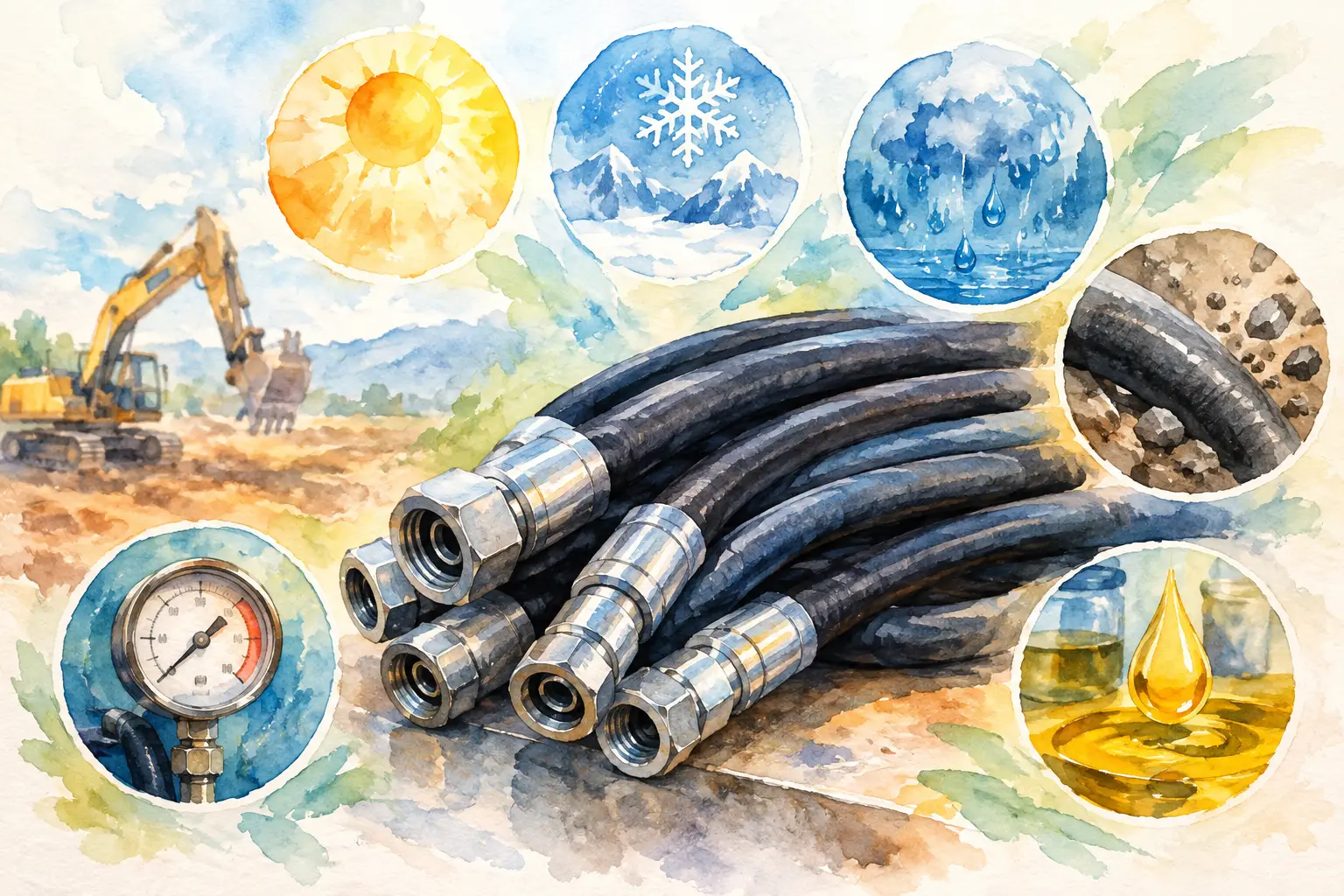
Heat is one of the quickest ways to age hose rubber. High oil temperature hardens the inner tube and cover, reduces flexibility and accelerates cracking. Heat can come from an overloaded hydraulic circuit, restricted cooler, low fluid level, incorrect oil viscosity or a machine working beyond its normal duty cycle.
External heat matters too. A hose routed close to an exhaust, turbocharger or hot engine component needs appropriate protection and clearance. Heat sleeves can help in the right application, but they do not correct a poor routing decision or a machine that is running too hot.
Hydraulic oil condition also affects hose life. Contaminated fluid can wear pumps, valves and cylinder seals, creating heat and pressure issues that place more strain on hoses. Using fluid that is incompatible with the hose tube can cause swelling, softening or deterioration from the inside. Follow the machine manufacturer’s fluid specification and address water or contamination early.
Abrasion, impact and the worksite environment
In field equipment, the outer cover often tells the story. Hoses rub against chassis rails, boom sections, guards, other lines and loose brackets. Dust and grit turn minor contact into abrasive wear. On mining, civil and agricultural equipment, mud buildup can conceal a rubbing point until the hose cover has worn through.
Look for polished areas, exposed reinforcement, flattened sections, cuts and cover that has become brittle. A protective sleeve is useful where contact cannot be avoided, but it should be checked too. A sleeve can hide damage if it is never moved during inspection.
Impact damage is another common issue. Stones, debris, forks, tools and moving loads can crush or cut a hose without causing an immediate leak. Any hose with a deep cut, kink, crushed section or exposed wire reinforcement should be removed from service. It is not worth gambling a machine, a load or a worker’s safety on a damaged pressure line.
Signs a hydraulic hose is nearing the end
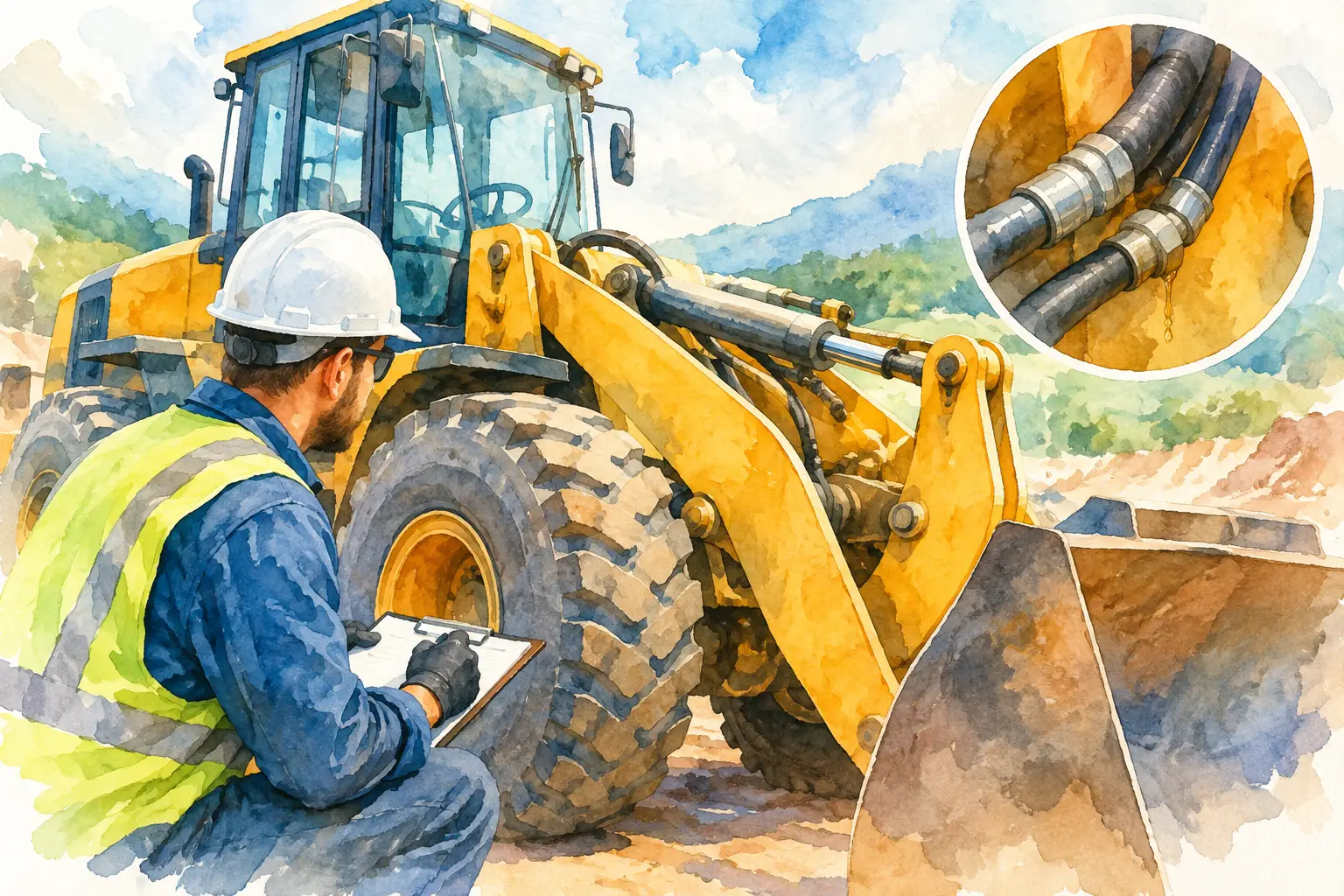
Condition-based maintenance is more reliable than waiting for a hose to burst. During pre-starts, scheduled servicing and washdowns, inspect accessible hoses and fittings for changes that point to deterioration.
Pay attention to these warning signs:
- Oil weeping around a fitting, through the hose cover or at a crimp.
- Cracks, blistering, swelling, soft spots or a cover that feels unusually hard.
- Abrasion that has worn through the cover or exposed reinforcement wire.
- Kinks, twists, flattened areas, tight bends or a hose pulling under machine movement.
- Damaged clamps, missing guards, loose brackets or hose contact with hot or moving components.
- Hydraulic oil that is overheating, foaming, discoloured or repeatedly needing top-up.
Fitting corrosion deserves attention as well. Corrosion can weaken the fitting, compromise the crimp area and make removal harder during a roadside or field repair. On equipment exposed to fertiliser, salt air, wash chemicals or wet conditions, inspect fittings closely rather than focusing only on the rubber hose.
Never check a suspected hydraulic leak with your hand. High-pressure fluid can penetrate skin and cause a severe injection injury even when the leak appears minor. Shut the machine down, relieve pressure according to the manufacturer’s procedure, isolate the area and use suitable inspection methods and personal protective equipment. Any suspected injection injury needs urgent medical treatment.
Replacement intervals: why hours alone are not enough
Some fleets replace certain hydraulic hoses at a nominated age or operating-hour interval, especially on critical equipment where a failure carries high safety or production risk. This can be a sound strategy when the fleet is consistent and service records are strong.
For mixed fleets, however, a fixed interval is only part of the decision. A low-hour machine stored outdoors may have more weather-related deterioration than a higher-hour machine kept under cover. A hose on an excavator boom experiences a different workload from one on a static hydraulic power pack. The best replacement plan combines manufacturer guidance, machine hours, hose age, operating conditions and inspection findings.
Record the date, hose specification and reason for replacement whenever practical. Over several services, this information can reveal repeat failures in the same circuit. That pattern might point to a routing issue, excessive vibration, wrong hose type, contaminated oil, a faulty relief setting or a cylinder problem. Replacing the hose without correcting the cause simply starts the countdown again.
Extending hydraulic hose lifespan in working fleets
Good hose life starts with correct selection and installation. The pressure rating, temperature range, hose construction, end fittings and compatibility with the hydraulic fluid must all suit the job. A cheaper or visually similar hose is not necessarily a suitable substitute for an OEM-specified assembly.
During fitting, avoid twisting the hose. Align fittings properly, use the correct bend radius and secure the line without clamping it so tightly that movement or expansion is restricted. Leave room for articulation and vibration. On booms and steering circuits, cycle the machine through its full range of movement after repairs to check for pulling, chafing and pinch points.
Preventative maintenance should include cleaning around hose runs, checking clamps and guards, monitoring hydraulic temperatures and keeping oil clean. If an operator reports sluggish hydraulics, unusual noise, repeated overheating or a persistent oil smell, investigate before the issue develops into a hose failure.
For businesses running several equipment types, consistent inspections make a real difference. A truck, telehandler, tractor, forklift and excavator may all use hydraulics differently, but each benefits from the same disciplined approach: identify damage early, repair the source of the problem and fit assemblies that match the application.
When a hose fails on site
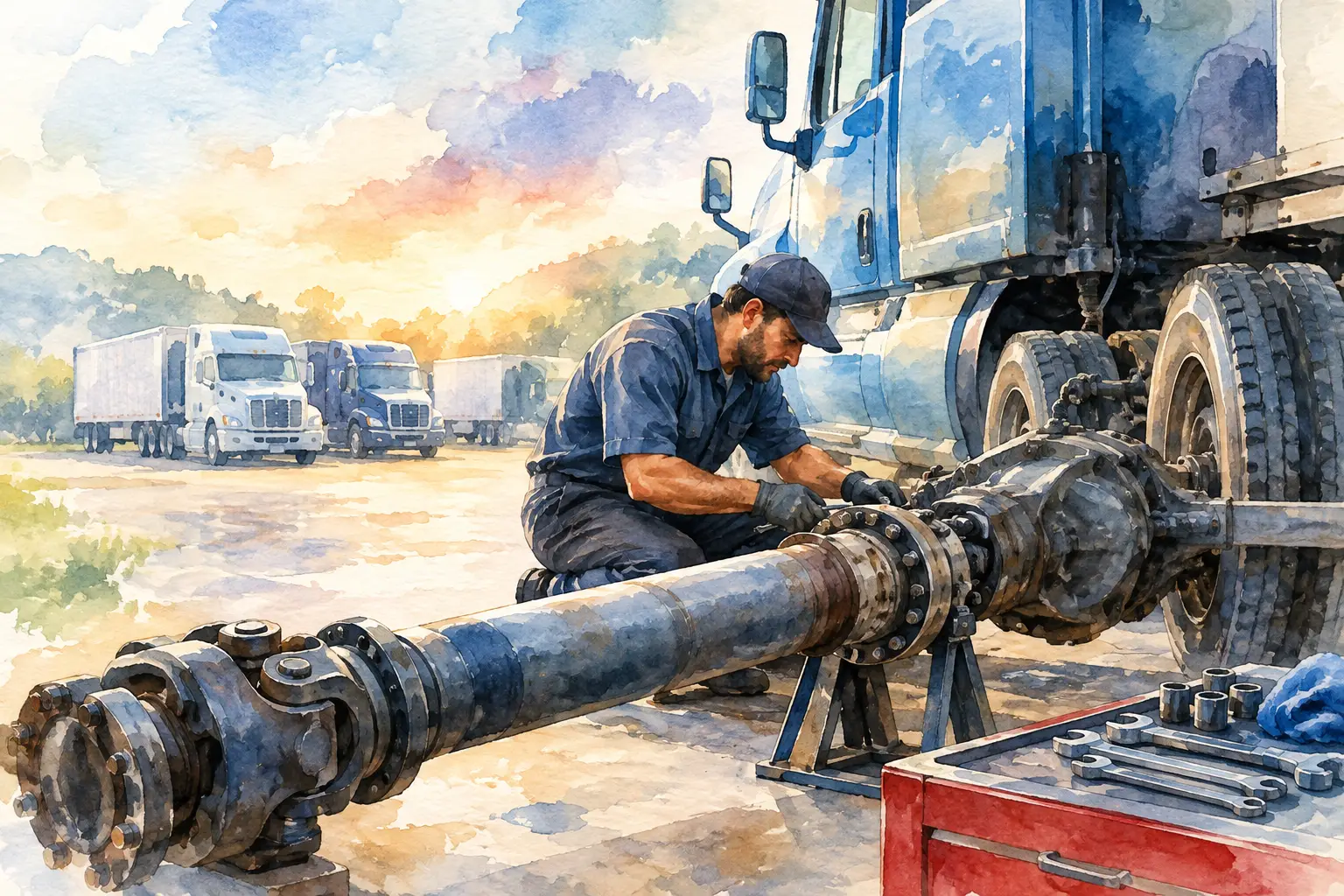
A burst hose can bring an operation to a standstill, but the immediate repair should still be handled properly. Make the machine safe, lower suspended implements where possible, isolate energy sources and contain any oil spill. Do not restart the machine until the replacement assembly, routing and fittings have been checked under controlled conditions.
Mobile hydraulic repair support is particularly valuable when moving disabled plant would add cost, delay or further risk. Agri Repairs provides field-based mechanical and hydraulic support for working equipment across Western Sydney and surrounding operational areas, helping crews get the right fault diagnosed and repaired where the machine has stopped.
Treat every damaged hose as useful information. The replacement gets the machine moving again, but the inspection that follows is what protects the next shift, the next job and the uptime your operation relies on.

 Location: Western Sydney and Hunter Valley, NSW