


A Penrith equipment repair example is rarely just about replacing a failed part. When a loader, truck, tractor or forklift stops on site, the real job is to find the fault accurately, make the repair safely and return the machine to productive work without creating a second failure down the track. Every hour of unplanned downtime can affect operators, deliveries, site schedules and the bottom line.
The following field-repair scenario shows how a structured approach can reduce disruption when heavy equipment fails. It is an illustrative example, but it reflects the practical decisions required across civil, agricultural, transport and industrial operations.
The breakdown: a loader loses hydraulic function
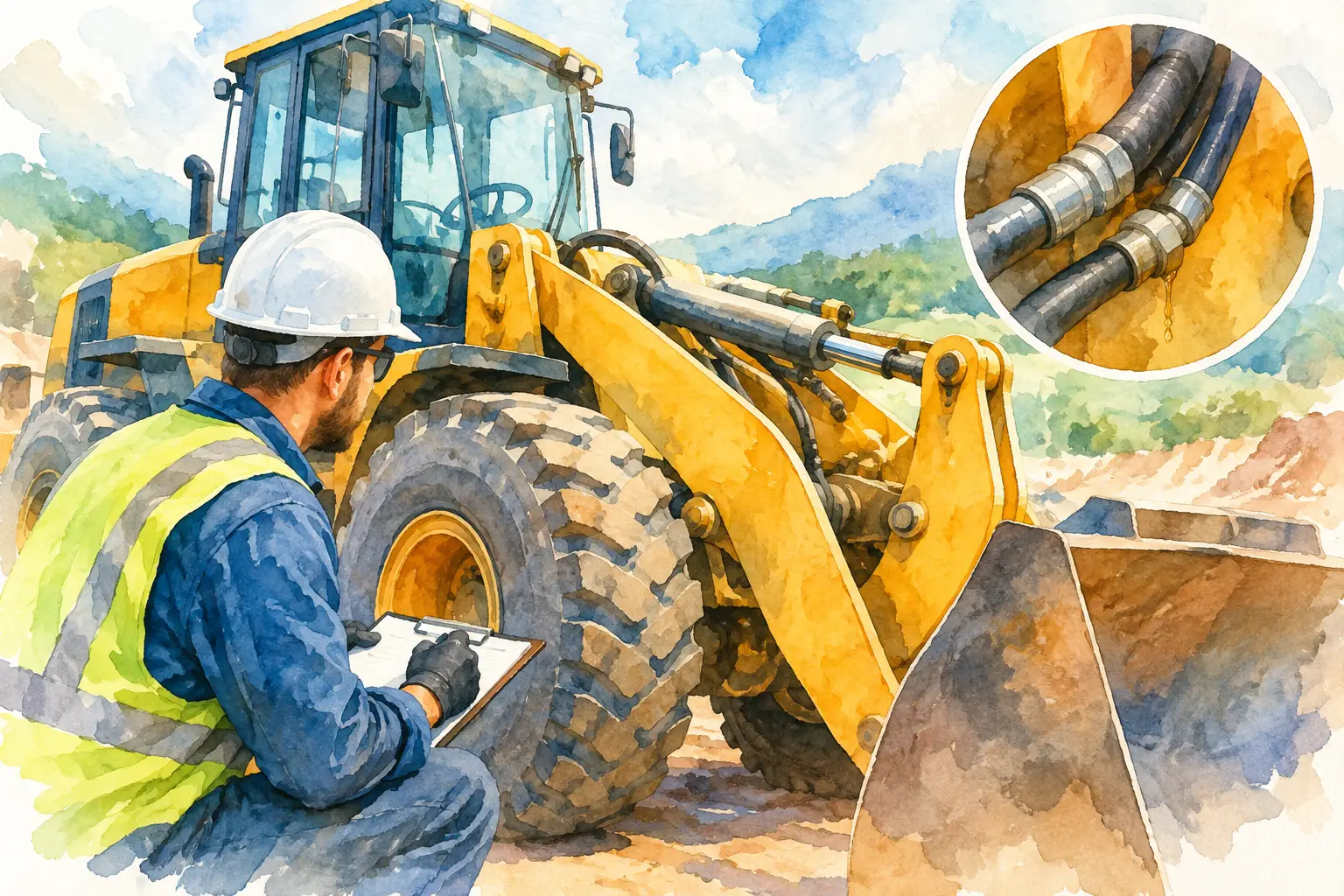
A civil contractor operating near Penrith has a wheel loader moving road base and loading trucks. Mid-shift, the operator notices slower boom movement, then intermittent steering response. Hydraulic oil is visible beneath the machine near the front articulation area. The loader can still idle and move a short distance, but it is no longer safe or productive to keep working.
Stopping the machine is the right call. Continuing to operate with a hydraulic leak can quickly turn a manageable hose or fitting issue into pump damage, contaminated components or a serious safety risk. It can also leave oil on the work area, creating a slip hazard and an environmental clean-up issue.
The site supervisor needs an answer to three immediate questions: what has failed, whether the machine can be repaired on site, and how long it will be out of service. A proper response starts with inspection rather than assumptions.
A Penrith equipment repair example starts with diagnosis
On arrival, the technician confirms the machine is isolated, secured and safe to inspect. Hydraulic systems retain pressure even after shutdown, so this step is not optional. The visible leak may point to the problem, but it does not automatically explain why it occurred.
The technician checks the hydraulic hose routing, abrasion points, clamps, fittings and cylinder connections. They inspect the oil level and condition, look for external damage around the articulation joint, and assess whether the hose has burst due to rubbing, age, overpressure or movement outside its normal range. The loader’s steering and implement circuits are also checked for related faults.
In this example, the immediate failure is a damaged hydraulic hose that has rubbed against a worn retaining clamp. The damaged clamp allowed the hose to move under articulation, gradually wearing through its outer cover. Replacing only the hose would restore pressure in the short term, but the new hose would likely fail in the same place if the clamp and routing issue were ignored.
That is the difference between a quick patch and a reliable repair. The failed component must be fixed, but the cause of the failure must be addressed as well.
Deciding whether mobile repair is suitable
Many hydraulic, electrical and mechanical faults can be repaired on site, especially when access is safe and replacement parts are available. Mobile repair avoids the cost and delay of arranging low-loader transport, unloading equipment and waiting for workshop space.
However, not every failure should be completed in the field. If the inspection identifies major structural cracking, extensive hydraulic contamination, a failed pump requiring a controlled rebuild, or unsafe site conditions, workshop repair may be the better option. The right decision depends on the repair scope, equipment condition and the level of testing required before release.
For this loader, a field repair is appropriate. The hose can be replaced, the retaining hardware renewed, and the circuit can be inspected and tested before the machine returns to loading duties.
Completing the repair properly
The repair process begins with containing the leak and protecting the work area. Hydraulic oil is cleaned up using suitable spill-control materials, while the failed hose is removed with care. Connection points are kept clean to prevent dirt entering the system.
A replacement hose needs to match the required pressure rating, fittings, length and routing. A hose that is close enough can become a problem under operating load. Incorrect length can create tension at full articulation; incorrect fittings can leak or damage threads; unsuitable hose specification can fail under pressure or heat.
The technician installs the correct hose, replaces the worn retaining clamp and checks nearby lines for similar wear. This is a sensible opportunity to inspect the machine beyond the single visible fault. Equipment working in dust, mud, vibration and repeated articulation often develops small issues around the same area.
Before restarting, hydraulic fluid is checked and topped up to the manufacturer’s specification where required. The system is then operated at low speed so the technician can check for leaks, abnormal noise and unrestricted movement. Steering, lift, tilt and auxiliary functions are tested through their working range, with close attention to the repaired hose at full articulation.
A repair is not finished when the oil stops dripping. It is finished when the equipment has been tested, the work area is safe and the operator has confidence that the machine can return to service.
What the site can do while waiting for repair
The way a breakdown is handled before a technician arrives can protect both people and equipment. Operators should report changes early, including slow hydraulic response, new noises, warning lights, fluid leaks, overheating or difficult starting. These symptoms give the repair team useful information before they attend site.
Once a fault is identified, isolate the machine where practical and keep it out of service. Do not repeatedly restart equipment to see if the problem clears. Do not tighten hydraulic fittings while a system is pressurised. A leak may look minor, but high-pressure fluid injuries are serious and require immediate medical attention.
Site access also matters. Provide the machine make and model, asset number, fault description and exact location. Clear access for a service vehicle, a safe work area and a contact person on site can reduce delays once the technician arrives.
The preventative maintenance lesson
This equipment repair example highlights a common reality: many breakdowns begin as inspection items. A loose clamp, hose rubbing point, damp electrical connector or small coolant seep may not stop a machine today. Left untreated, it can become tomorrow’s breakdown at the busiest point of a shift.
Planned servicing gives operators and fleet managers a chance to correct these issues under controlled conditions. It also creates a useful maintenance history. When recurring faults are documented, a repairer can identify patterns across similar machines, trailers or fleet assets and recommend changes to service intervals, parts stocking or inspection routines.
For hydraulic equipment, regular checks should cover hose condition, fittings, clamps, oil levels, leaks and damage around moving sections. The service plan should reflect operating conditions. A loader working occasional yard duties does not face the same wear profile as a machine operating full shifts in a quarry, on a civil site or through wet agricultural ground.
The same principle applies to trucks, tractors, excavators, forklifts and trailers. Maintenance schedules are not simply compliance paperwork. When they are matched to the actual workload, they help prevent disruption, improve safety and extend component life.
Choosing the right repair support
When equipment fails, the lowest quoted repair is not always the lowest operational cost. A rushed diagnosis can result in repeat call-outs, further damage and more lost production. The better question is whether the repair provider can assess the full issue, communicate clearly and complete work to a standard that holds up in service.
For mixed fleets, it helps to work with a team that understands diesel engines, hydraulics, electrical systems, trailers and fabrication work. One capable provider can simplify maintenance coordination and reduce the time spent calling separate specialists for each asset type.
Agri Repairs provides mobile heavy equipment, truck, trailer and agricultural machinery support across Western Sydney, including Penrith, with workshop-quality diagnostics and repairs delivered where the equipment is needed. For urgent faults, clear fault details and early contact help get the right response moving sooner.
A machine failure will never arrive at a convenient time. But a disciplined response – isolate, diagnose, repair the cause and test the result – gives your operation the best chance of getting back to work safely and staying there.

 Location: Western Sydney and Hunter Valley, NSW