


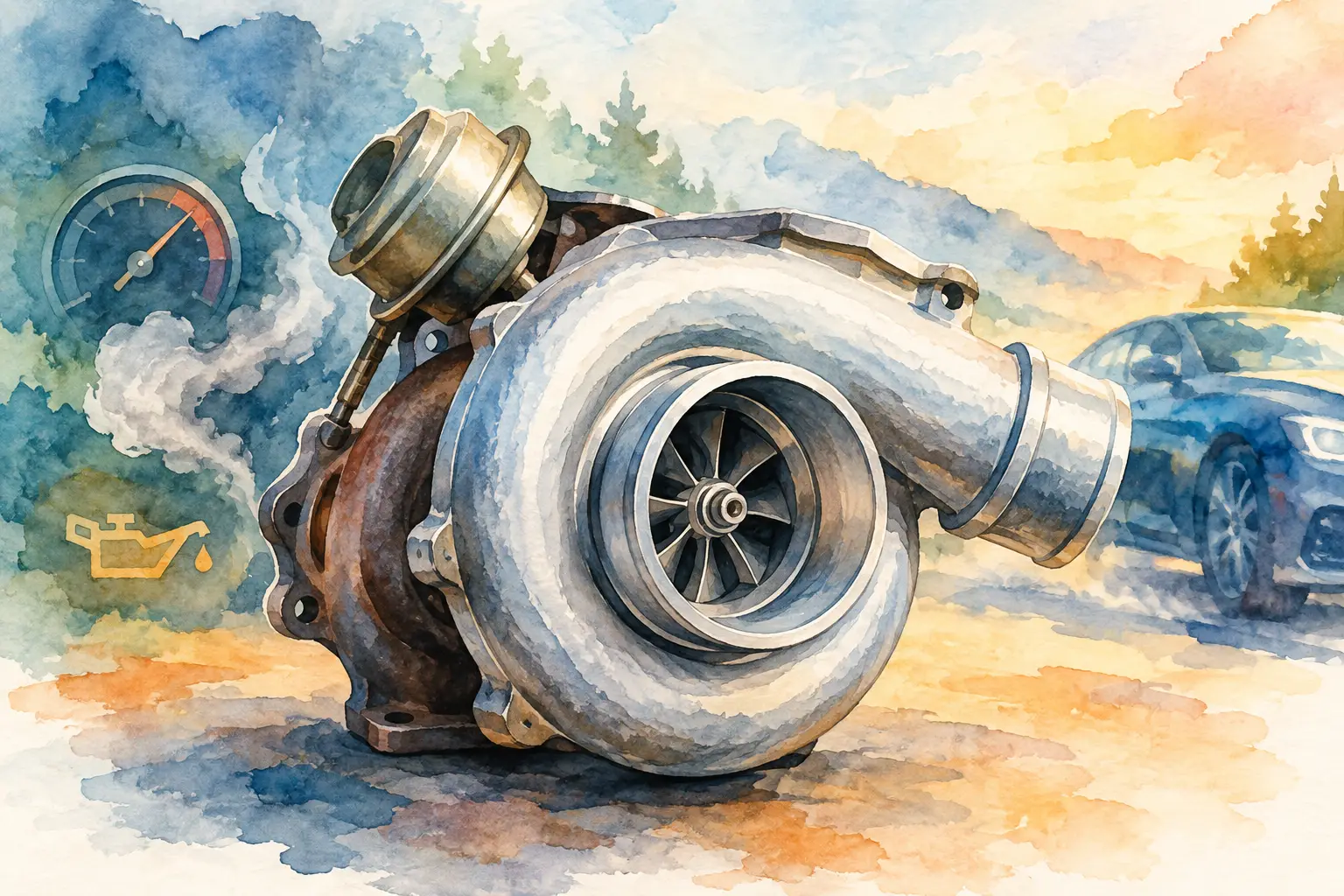
A loaded truck that suddenly feels flat on a grade, a tractor that will not pull as it normally does, or an excavator losing response under hydraulic load can quickly turn a productive shift into downtime. Recognising failing turbocharger signs early gives operators and fleet managers a chance to protect the engine, organise repairs and avoid a much larger failure.
A turbocharger is not a bolt-on performance extra in modern diesel equipment. It supplies the air needed for efficient combustion, torque and controlled exhaust emissions. When it starts to fail, the problem may be in the turbo itself, but it can also point to an air leak, blocked filter, restricted exhaust, oil supply issue or underlying engine fault. Proper diagnosis matters before parts are replaced.
1. Noticeable loss of power under load
A loss of pulling power is one of the most common signs of turbocharger trouble. The machine may start and idle normally, but struggle when climbing, carrying a load, towing a trailer or working through heavy material. Operators often describe it as a lazy throttle response or a unit that feels like it has lost its usual grunt.
This does not automatically mean the turbocharger has failed. Split intercooler hoses, loose clamps, blocked intake filters, damaged charge-air coolers and fuel-system faults can create similar symptoms. However, if power loss is paired with unusual noise, smoke or oil consumption, the turbo system needs prompt inspection.
2. High-pitched whistling, siren noise or scraping
A healthy turbocharger produces some normal whistle as boost builds, particularly in trucks and heavy equipment working hard. What is not normal is a sudden, louder whine that rises like a siren, a metallic scraping noise or an inconsistent whistle that was not present before.
These sounds can occur when the compressor or turbine wheel contacts its housing, when bearings develop excessive play, or when an air leak changes the sound of the pressurised intake system. Do not assume a noisy turbo will keep working until the next service interval. Continued operation can allow broken components or oil into the intake and exhaust system.
3. Blue, black or excessive white exhaust smoke
Exhaust colour provides useful clues, provided it is assessed in operating conditions rather than only at cold start. Blue smoke may indicate engine oil entering the combustion process. A failed turbo seal can be one cause, although worn engine components, crankcase ventilation faults and overfilled oil also need to be ruled out.
Black smoke often means there is too much fuel for the available air. A turbocharger that is not making boost, a restricted air intake or a charge-air leak can all contribute. White smoke can have several causes, including unburnt fuel or coolant-related faults, so it should never be blamed on the turbocharger without testing.
Any sudden increase in smoke on a working diesel should be treated as an operating and safety concern. It can affect visibility, site compliance and engine reliability, particularly if the equipment is repeatedly placed under load.
4. Rising engine oil consumption or oil leaks
Turbochargers rely on a clean, controlled oil supply to lubricate the centre housing and bearings. If oil is found in boost pipes, the intercooler, compressor housing or exhaust side of the turbo, the cause needs to be investigated. A light oil film can be normal in some intake systems, but pooling oil or a rapid drop on the dipstick is not.
External oil leaks around turbo oil feed and drain lines also require attention. A restricted drain line, incorrect oil level, excessive crankcase pressure or a damaged seal may be behind the issue. Replacing a turbo without fixing the oil-related cause risks damaging the replacement unit as well.
5. Check-engine warnings, derates or limp mode
Modern trucks, loaders, telehandlers and agricultural machinery use sensors to compare expected boost pressure, air flow and exhaust performance with actual readings. A boost-related fault can trigger a warning light, engine derate or limp mode, reducing power to protect the engine and emissions system.
Fault codes are a starting point, not a complete diagnosis. A code for underboost, overboost or airflow may be caused by a sticking variable-geometry actuator, damaged wiring, failed pressure sensor, exhaust restriction or an intake leak. Reading live data while the equipment is operating is often far more useful than replacing the part named in a code description.
6. Poor fuel economy and more frequent regeneration
When the engine is not getting the air it expects, fuel efficiency can suffer. The operator may need more throttle to maintain speed or cycle times, and the engine can produce more soot under load. On equipment fitted with a diesel particulate filter, this may lead to more frequent regeneration requests or regeneration faults.
Poor fuel economy has many possible causes, from tyre pressures and payloads to injector condition and operator technique. But if the change is sudden and arrives with lower boost, smoke or a new turbo noise, the air and exhaust system should be checked before the unit is worked any harder.
7. Slow boost response or unstable boost pressure
A turbocharger should build boost predictably as engine speed and load increase. If boost is slow to arrive, comes and goes, or spikes unexpectedly, the issue could be mechanical wear inside the turbo, an actuator fault or a leak in the charge-air system.
Variable-geometry turbochargers are particularly dependent on clean movement of internal vanes and accurate actuator control. Soot buildup, actuator problems and wiring faults can affect their operation. These systems need the correct diagnostic approach – forcing an actuator or guessing at adjustments can create a more expensive problem.
8. Damaged hoses, loose clamps or contaminated intake parts
Not every turbo-related breakdown begins at the turbocharger. A damaged hose between the turbo, intercooler and inlet manifold can dump boost pressure and leave an oily residue around the split. Loose clamps, collapsed intake ducting and blocked air filters can have the same practical effect: the engine cannot get enough clean air.
A visual inspection is worthwhile during pre-start checks and scheduled servicing. Look for rubbing, cracking, oil mist around joins, missing clamps and signs that a hose has ballooned under pressure. On dusty farms, quarries and civil sites, air filtration deserves particular attention. Ingested dust can damage compressor wheels and, over time, the engine itself.
9. Excessive shaft movement found during inspection
With the engine off and the intake pipe removed, a qualified technician can inspect the turbocharger for wheel damage and shaft movement. Some small radial movement may be present in certain units before oil pressure is established. Contact between the wheel and housing, obvious axial movement, chipped blades or heavy oil deposits are not normal findings.
This inspection should be carried out carefully. Foreign material must not be allowed into the intake, and the turbo wheel should not be forced or spun with tools. On a working fleet, it is usually more efficient to combine the physical inspection with pressure testing, scan-tool data, oil checks and a review of the fault history.
What to do when you suspect a turbo problem
If the machine has lost power, started smoking heavily, developed a siren-like noise or is using oil rapidly, reduce load and arrange an inspection as soon as practical. Continuing to work it hard can turn a repairable air leak or lubrication fault into a turbocharger failure, engine damage or aftertreatment problem.
Avoid the common shortcut of fitting a replacement turbocharger without finding the original cause. The investigation should include air filtration, intake and intercooler plumbing, exhaust restrictions, oil feed and drain condition, oil quality, crankcase pressure, electronic controls and engine condition. This is where workshop-quality diagnostics in the field can prevent repeat failures and unnecessary parts costs.
For fleets operating across Western Sydney and demanding work environments, a fast response is valuable, but accurate diagnosis is what gets equipment back to work reliably. When the first warning sign appears, act before a minor loss of boost becomes a stranded truck, stopped harvest or unplanned site shutdown.



 Location: Western Sydney and Hunter Valley, NSW
1 Comment
[…] sensor or exhaust leak. Likewise, frequent regeneration can be a symptom of injector issues, turbocharger faults, EGR problems, air-intake restrictions or oil […]