


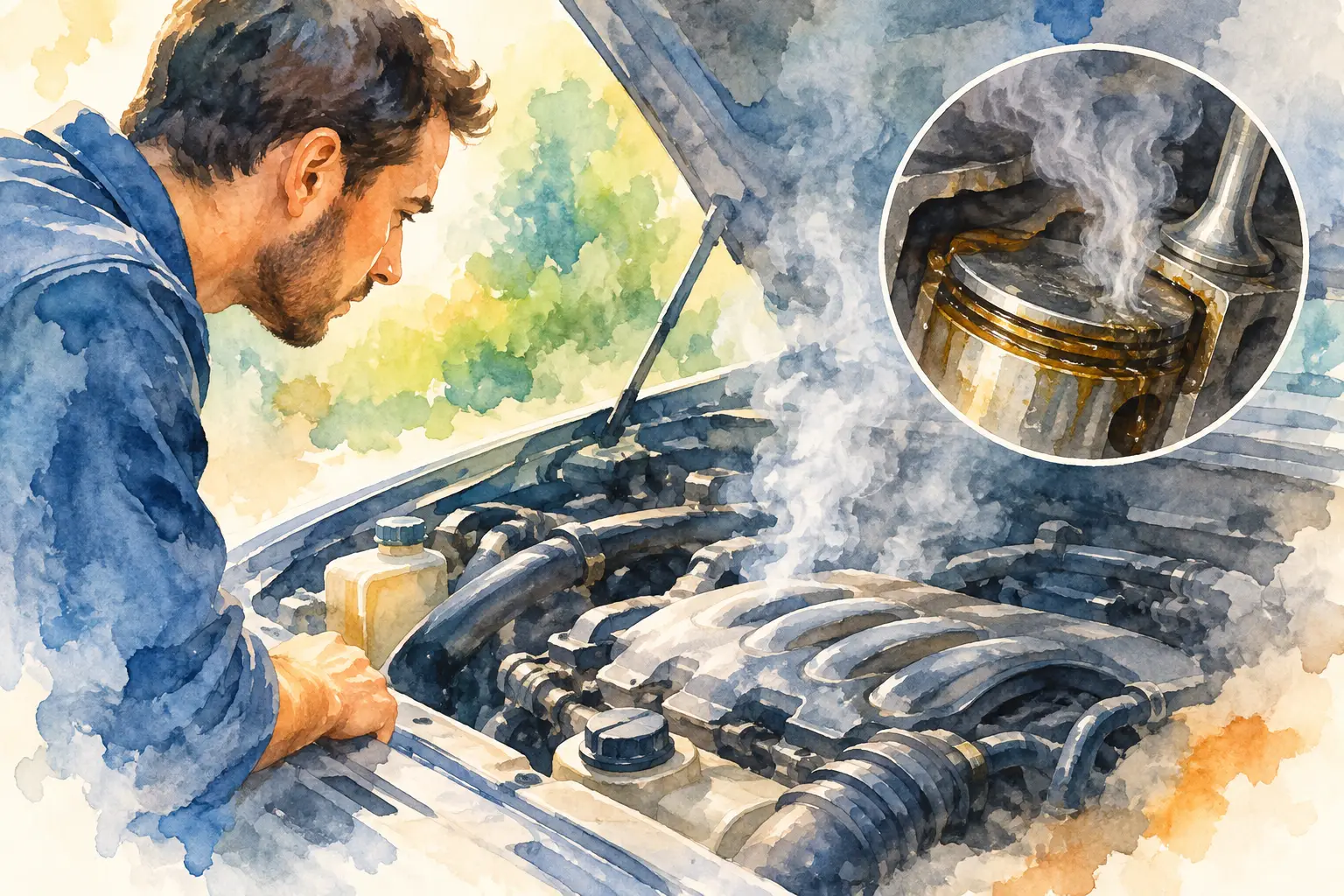
A diesel that suddenly pushes vapour from the breather, uses more oil, or leaves oil around the engine bay is giving your operation an early warning. Knowing how to identify engine blowby can help you act before a truck, tractor, loader or generator turns a manageable repair into an expensive breakdown. The key is to assess the full pattern, not diagnose an engine from one puff of vapour at the oil filler.
What engine blowby actually means
Every combustion engine has a small amount of combustion gas that passes the piston rings and enters the crankcase. This is normal. The crankcase ventilation system is designed to manage that gas and prevent pressure building inside the engine.
Blowby becomes a problem when the volume of gases passing the rings is excessive, or when the breather system cannot move those gases correctly. High crankcase pressure can force oil past seals, through breathers and into places it does not belong. On hard-working diesel equipment, that can mean oil contamination, rising oil consumption, loss of performance and an unplanned stop.
Worn piston rings and cylinder liners are common causes, but they are not the only causes. A blocked breather, incorrect oil level, turbocharger fault, damaged piston, poor combustion, or extended service intervals can create similar symptoms. That is why a proper diagnosis matters before approving major engine work.
Signs of engine blowby on heavy diesel equipment
The most obvious sign is visible vapour or smoke coming from the crankcase breather. On a warm engine, a light mist may be normal, especially in cool weather. Constant heavy fumes, pulsing vapour, or oil droplets being expelled from the breather deserve attention.
Oil leaks that appear across several areas of the engine can also point to crankcase pressure. Look around rocker cover gaskets, timing covers, dipstick tubes, front and rear crank seals, and breather hoses. A single wet gasket may simply be an ageing seal. Oil suddenly appearing from multiple sealing points is more concerning.
Excessive oil consumption is another common warning. If the engine needs regular top-ups between normal service intervals and there is no obvious external leak, oil may be passing into the combustion chamber or being carried through the breather system. Blue-grey exhaust smoke under load can support that finding, although it may also indicate a turbocharger or valve-seal issue.
Other symptoms often travel with severe blowby. These include reduced power, hard starting, rough running, increased fuel use and a noticeable loss of compression. In some cases, operators report the dipstick lifting, oil mist around the filler cap, or breather hoses that are wet with fresh oil.
None of these signs should be judged in isolation. A dusty site, steep operating angles, overfilled oil, incorrect oil grade and a neglected breather can all change what you see around an engine.
How to identify engine blowby safely
Start with a controlled visual inspection. Park the machine on level ground, apply isolation procedures, and let hot surfaces cool where required. Check the oil level first. An overfilled sump can cause aeration and force oil vapour through the breather, creating a false impression of serious internal wear.
Inspect the crankcase breather assembly, hoses and catch system for restrictions, collapsed hoses, loose fittings and heavy sludge. A blocked breather can cause high crankcase pressure even if the pistons, rings and liners are still serviceable. On equipment operating in dust, heat or long idle periods, breather condition should be part of routine maintenance rather than an afterthought.
With the engine at normal operating temperature, observe the breather outlet at idle and, where safe, at a controlled increase in engine speed. Excessive blowby is usually more than light vapour. It may be forceful, visibly pulsing with each cylinder event, and accompanied by oil spray. Keep hands, clothing and tools clear of belts, fans and hot exhaust components.
The old oil-cap check can provide a quick indication, but it is not a conclusive test. Removing the filler cap on a running engine may show vapour or pressure, but modern engines have different ventilation arrangements and normal crankcase pulses can make the result misleading. Do not rely on whether a cap dances or lifts as proof that an engine needs rings.
A better assessment uses a crankcase pressure or blowby flow test. The correct procedure and acceptable reading depend on the engine manufacturer, model and ventilation design. A technician uses the appropriate adaptor and calibrated gauge or flow meter, then compares the result with the manufacturer specification. This turns a visual concern into evidence you can use when planning repairs.
Separate blowby from similar faults
A breather covered in oil does not automatically mean the engine needs an overhaul. Before stripping anything down, check the likely alternatives.
A restricted crankcase breather can cause pressure and leaks with no major cylinder wear. This is usually the first item to inspect because it is straightforward to service and can prevent further seal damage.
Turbocharger faults can create oil consumption, blue smoke and oil in intake or charge-air piping. If the turbo seals or bearing system are failing, the symptoms can closely resemble blowby. Inspecting compressor and turbine sides, intake plumbing and intercooler contamination helps separate the two.
Injector faults, poor fuel quality or low compression can cause black smoke, rough operation and reduced power. These faults may contribute to cylinder damage over time, but they require their own testing. Fault codes, injector balance checks, fuel-system inspection and compression testing may all be needed.
On engines with high operating hours, worn liners and rings may genuinely be the cause. Dust ingestion is a frequent contributor in agricultural, mining and civil applications. Check the air intake system carefully, including filter condition, housing seals, clamps and intake hoses. Repairing an engine without fixing the source of dirt ingress risks repeating the failure.
Tests that provide a reliable diagnosis
A professional diagnosis normally combines crankcase pressure testing with a general engine condition check. Oil and coolant condition, service history, fault codes, air intake condition, exhaust behaviour and external leaks all help build the picture.
Where readings indicate excessive crankcase pressure, further testing may include a compression test, cylinder leak-down test, borescope inspection and oil analysis. A leak-down test is particularly useful because it can help identify where pressure is escaping. Air heard at the oil filler or breather suggests leakage past rings or piston damage, while air at the intake or exhaust may indicate valve sealing issues.
A borescope can reveal liner scoring, piston crown damage or evidence of dust ingestion without immediately removing the cylinder head. This can reduce unnecessary dismantling and help a fleet manager decide whether to schedule repairs, rebuild the engine, or monitor the asset while parts and downtime are planned.
Results need context. A high-hour prime mover may show more crankcase vapour than a low-hour machine and still remain within manufacturer limits. Conversely, a relatively new engine with rapidly increasing blowby needs urgent investigation, particularly if it is under warranty or has recently had air-intake, injector or engine work completed.
When to stop operating the machine
Do not keep running equipment simply because it still starts and moves. Arrange an inspection promptly if crankcase pressure is forcing out the dipstick, expelling significant oil from the breather, causing sudden oil leaks, or appearing alongside power loss and smoke.
Stop the engine immediately if there is a rapid loss of oil pressure, runaway engine behaviour, severe knocking, a major oil leak onto hot components, or a suspected damaged piston. Continued operation can turn a liner and ring repair into a failed turbocharger, damaged bearings or a full engine replacement.
For fleet equipment, record oil top-ups, smoke reports and breather observations in the service history. Trends are valuable. An operator who notes that a loader now uses two litres of oil per shift has supplied a far more useful diagnostic clue than a general report that it is “breathing a bit”.
Preventing premature blowby issues
Prevention comes back to disciplined servicing. Use the specified engine oil, keep oil levels correct, replace filters on schedule and service crankcase breathers as required. In dusty work, inspect the intake system more often than the standard calendar interval may suggest.
Avoid extended operation with intake leaks, injector faults or overheating. Each can increase combustion stress and accelerate ring, piston and liner wear. Scheduled oil analysis can also flag contamination and abnormal wear before visible blowby develops.
For machinery working across Western Sydney sites, farms, haul roads or remote projects, mobile diagnostics can reduce the delay of transporting a disabled asset to a workshop. Agri Repairs can assess heavy diesel symptoms on site, test the likely causes and recommend the repair path based on actual engine condition.
Visible breather vapour is a reason to investigate, not a reason to guess. Catch the change early, test it properly, and you have the best chance of keeping the machine earning rather than waiting on a major repair.




 Location: Western Sydney and Hunter Valley, NSW
1 Comment
[…] and drain lines also require attention. A restricted drain line, incorrect oil level, excessive crankcase pressure or a damaged seal may be behind the issue. Replacing a turbo without fixing the oil-related cause […]